






The number one Tour Operator in Tanzania
The number one Tour Operator in Tanzania
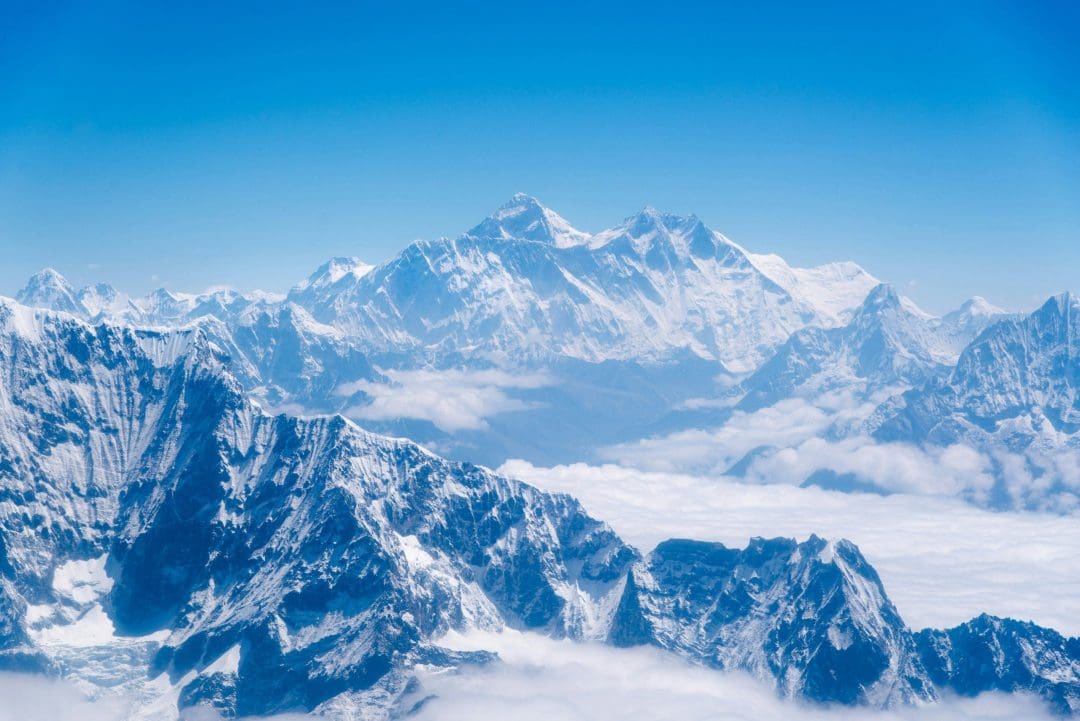
Rising high above the clouds, the tallest mountains in the world are nature’s grandest monuments, silent giants that have shaped both the planet’s geography and human imagination. Most of these peaks lie within Asia’s mighty Himalayan and Karakoram ranges, which stretch across Nepal, China, and the Tibetan Plateau. Here, the Earth’s crust continues to shift and rise due to its presence.
Ever wonder why climbers spend months preparing for a single ascent? From Mount Everest, the crown of the Himalayas, to towering summits like K2 and Kangchenjunga, these mountains are not just records of geological power; they’re symbols of endurance, exploration, and wonder. In this guide, we’ll explore the tallest mountains on Earth, their exact heights, and the stories that make each one a marvel of nature.
Country: Nepal and Tibet
Height: 8,848 meters (29,032 feet)
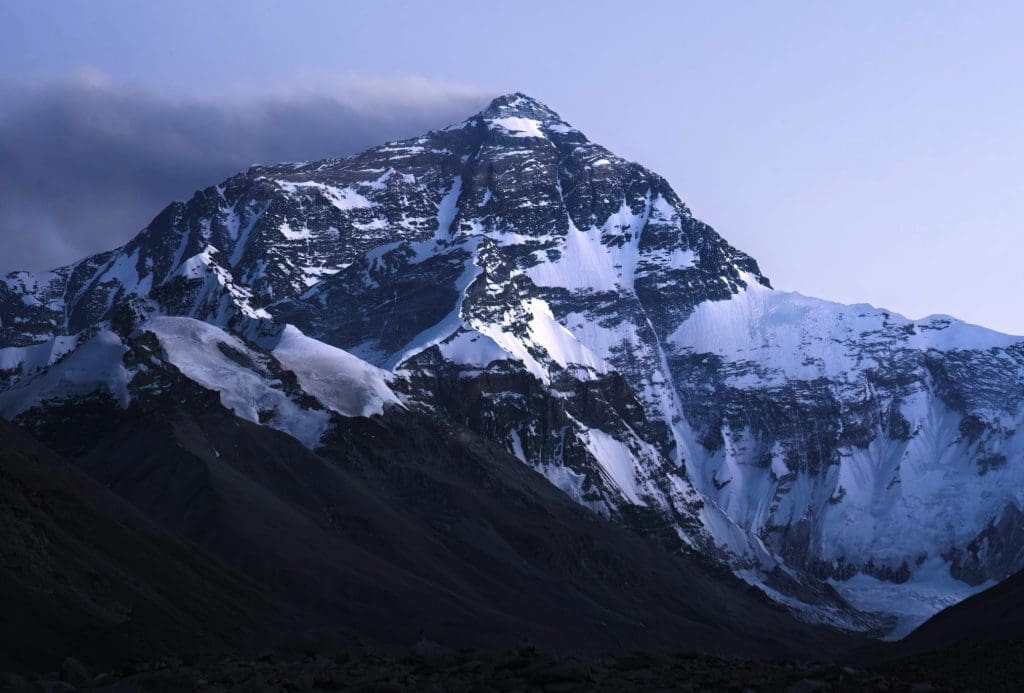
Mount Everest is the tallest mountain in the world, rising to an incredible 8,848.86 meters (29,031 feet) above sea level. Its extreme altitude means thin air, freezing temperatures, and unpredictable winds; conditions that make every step toward the summit an actual test of endurance. Because of these challenges, climbers often spend years training and acclimatizing before attempting to reach its legendary peak.
This world’s tallest mountain is also known as the Tibetan “Chomolungma” and the Nepalese“Sagarmatha.” It sits on the border between Nepal and Tibet, an autonomous region of China. The Nepalese and Chinese governments issue between 300 and 800 permits to climb the giant each year.
Country: Pakistan and China
Height: 8611 meters (28,251 feet)
K2 is the second-tallest mountain in the world, making it one of the most challenging peaks to climb. Located along the Pakistan-China border, many experienced climbers actually consider Mount K2 vs Mount Everest to be one of the greatest debates in mountaineering, as K2 is often seen as a more challenging climb than Everest due to its steeper faces and harsher weather conditions.
Due to its challenging nature, only about 367 climbers had reached K2’s summit by 2018, compared to over 4,000 who had reached Everest’s summit. The difference isn’t just in the numbers; it’s in the climb itself. K2’s route is a maze of sheer ice walls, hidden crevasses, and shifting avalanches that test even the most seasoned mountaineers. Some climbers even joke that on K2, “the mountain decides if you’re going up or going home.”
Country: Nepal and India
Height: 8,586 meters (28,169 feet)
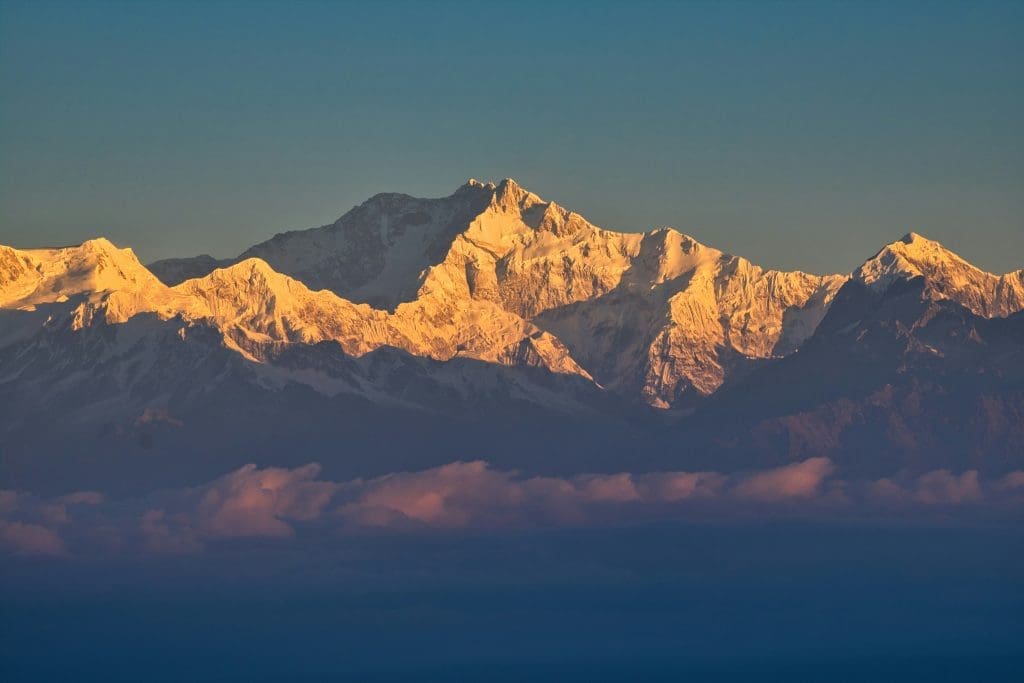
Kanchenjunga is the third-tallest mountain in the world. It is situated in the eastern Himalayas on the border between the Sikkim state of northeastern India and eastern Nepal, 46 miles (74 km) north-northwest of Darjeeling, Sikkim.
The mountain is part of the Great Himalayan Range and is recognized by the Kanchenjunga massif, which forms a gigantic cross whose arms extend in every direction. But beyond its breathtaking symmetry lies one of the most challenging climbs on Earth. Kanchenjunga’s steep ice cliffs, unpredictable weather, and high avalanche risk make it a formidable test even for experienced climbers, so much so that it’s often said the mountain demands respect before allowing anyone near its summit.
Country: Nepal and Tibet
Height: 8,516 meters (27,940 feet)
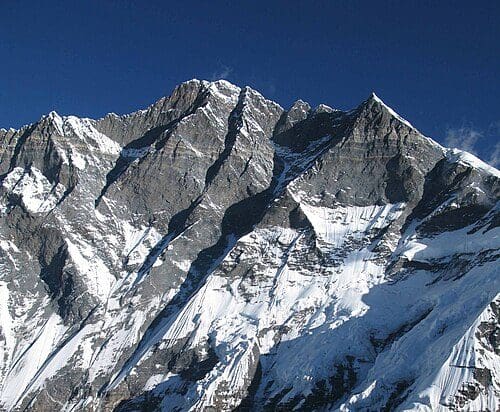
Lhotse, located on the border of Nepal and Tibet, is separated from Everest by just under two miles. However, only 575 climbers reached the 27,940-foot peak between 1955 and 2019. In 2011, American guide Michael Horst became the first to summit both Everest and Lhotse within the same 24-hour period.
Lhotse has gained increasing popularity because it attracts fewer crowds, is less expensive, and offers the same route as Everest for the initial ascent.
Country: Nepal and Tibet
Height: 8,485 meters (27,838 feet)
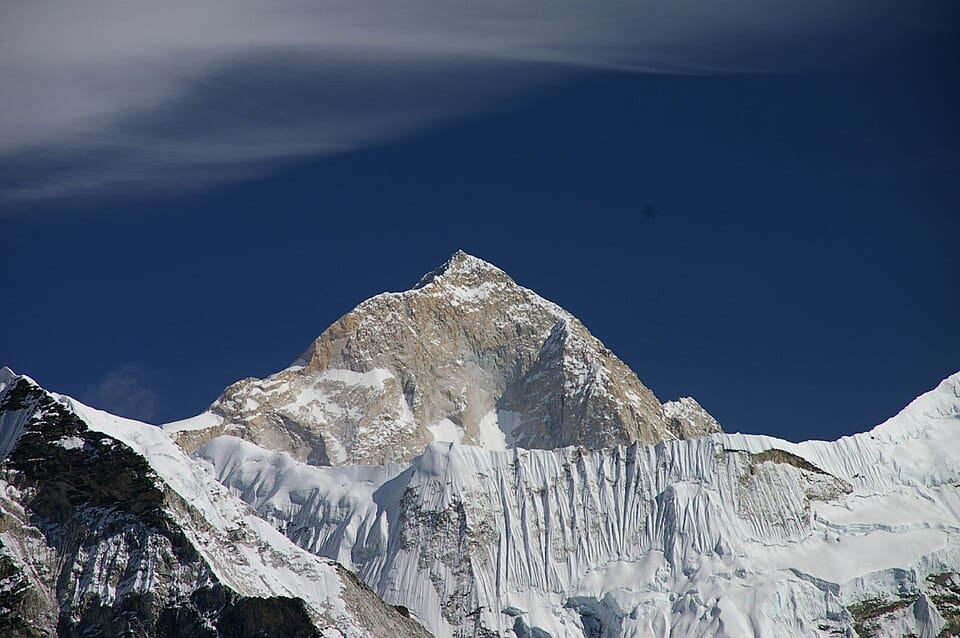
Makalu is the fifth-tallest mountain in the world. Its remote, four-sided peak makes Makalu one of the world’s most difficult mountains to climb. It features sharp, exposed ridges and an isolated position, leaving climbers vulnerable to biting winds, sudden snowstorms, and temperatures that can drop well below −30°C (−22°F). As a result, only five of the first 16 climbing attempts proved successful, and even now, only 206 trekkers have successfully made ascents.
Country: China and Nepal
Height: 8,188 meters (26,864 feet)
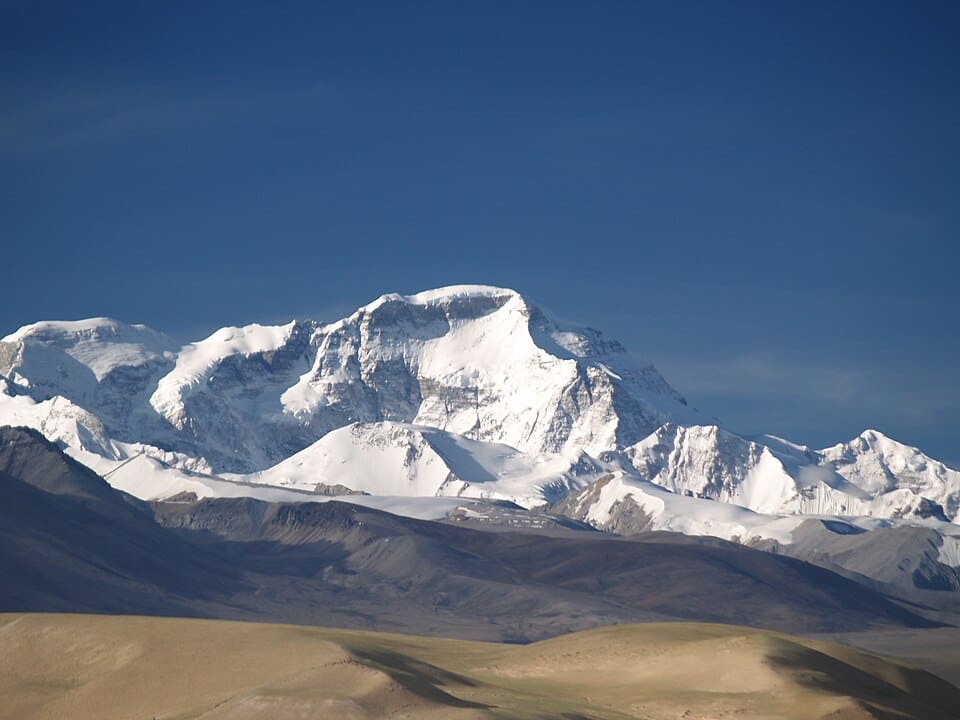
The sixth-tallest mountain in the world, Cho Oyu, lies in the heart of the Tibetan and Nepalese Himalayas and offers climbers views of Everest and Lhotse. Climbers often use this mountain as a training ground for an Everest trek or to gauge their body’s reaction to high altitude. That’s not to say scaling this massive mountain isn’t dangerous; Cho Oyu has claimed the lives of at least 52 people since 1952.
Country: Nepal
Height: 8,167 meters (26,795 feet)
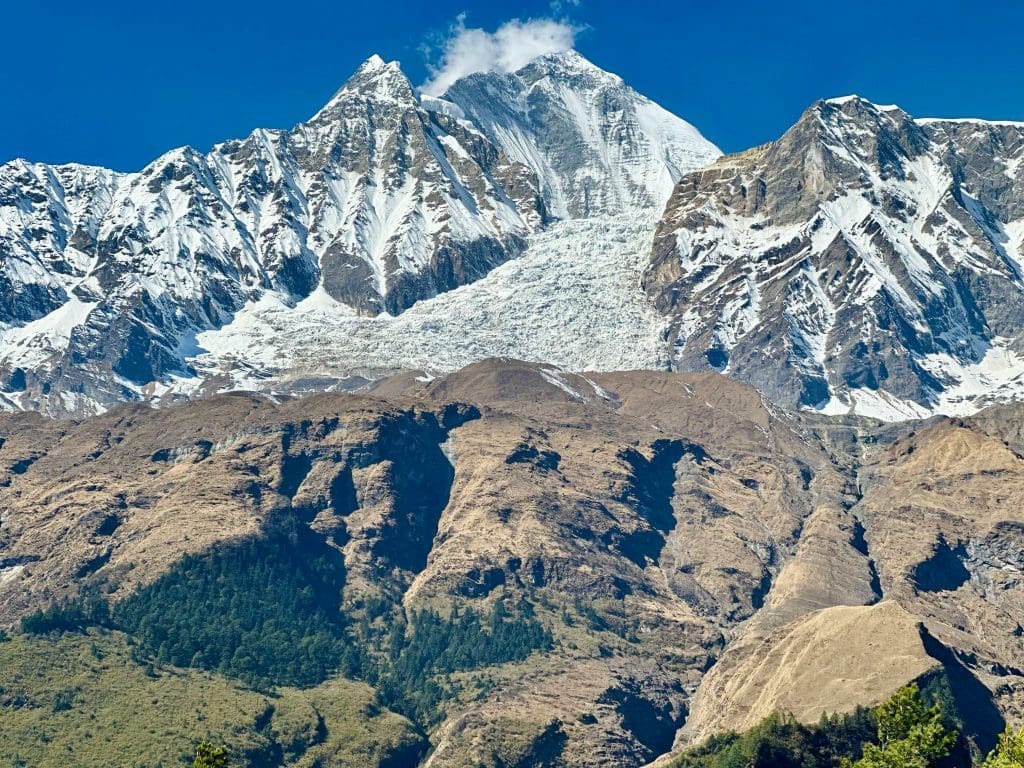
Dhaulagiri is located in west-central Nepal, about 50 miles from Kathmandu. It is the seventh-tallest mountain in the world, often referred to as the White Mountain. Similar to Everest, the summit of Dhaulagiri is made up of limestone and dolomite layers that once lay at the bottom of an ancient ocean before being pushed upward by massive tectonic forces. But Dhaulagiri isn’t just geologically fascinating, it’s also one of the most dangerous 8,000-meter peaks to climb. The route is steep, avalanche-prone, and constantly exposed to violent winds and subzero temperatures. Many climbers rank it among the world’s toughest ascents, where both endurance and timing can mean the difference between success and survival.
Country: Nepal
Height: 8,163 meters (26,781 feet)
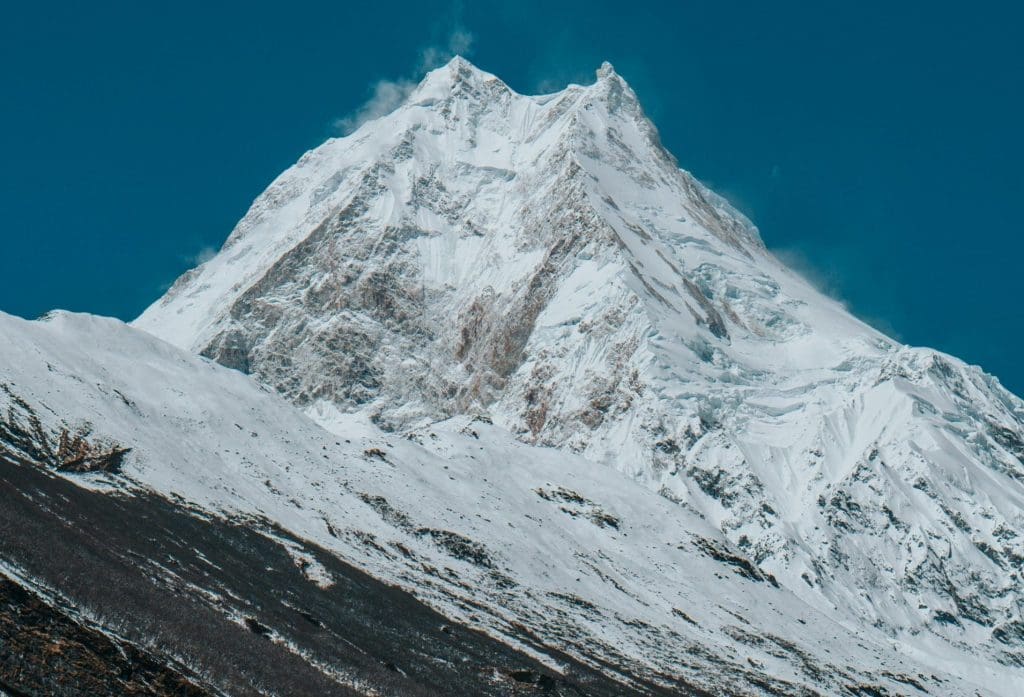
Mount Manaslu is the eighth-highest peak in the world, rising to 26,781 feet. It’s located about 40 miles east of Annapurna and dominates the Gurkha massif, standing as a striking symbol of both beauty and danger. Known locally as “Kutang” or the “Mountain of the Spirit,” Manaslu has a rich mountaineering history. Its first successful ascent was made in 1956 by Toshio Imanishi and Gyalzen Norbu, part of a Japanese expedition; a feat that cemented Japan’s place in Himalayan climbing history. Yet, the mountain remains treacherous, with narrow ridges, unpredictable weather, and avalanche-prone slopes that make it one of the most respected and feared 8,000-meter peaks in the world.
Country: Pakistan
Height: 8,126 meters (26,660 feet)
Nanga Parbat is situated in the northern regions of Pakistan and is the westernmost bastion of the Himalayas. It is the ninth-tallest mountain in the world. Nanga Parbat earned its reputation as the “Killer Mountain” after 26 people died in attempts to reach the summit before its first ascent in 1953 (a feat completed by Austrian climber Hermann Buhl, who climbed without supplemental oxygen).
Country: Nepal
Height: 8,091 meters (26,545 feet)
Annapurna is the world’s 10th-highest peak. Although climbers had reached 28,150 feet on Mount Everest by 1924, Annapurna I gained fame in 1950 as the first peak above 26,000 feet to be successfully ascended to its summit.
Maurice Herzog and Louis Lachenal were the first to reach the summit (losing their toes and fingers to frostbite as a result), marking the first of the Earth’s 14 eight-thousanders to be scaled; another successful climb wasn’t achieved for 20 years.
Today, the region attracts trekkers from around the world eager to experience the stunning landscapes of the Annapurna Base Camp trek, one of Nepal’s most scenic and rewarding routes.
Country: China and Pakistan
Height: 8,080 meters (26,509 feet)
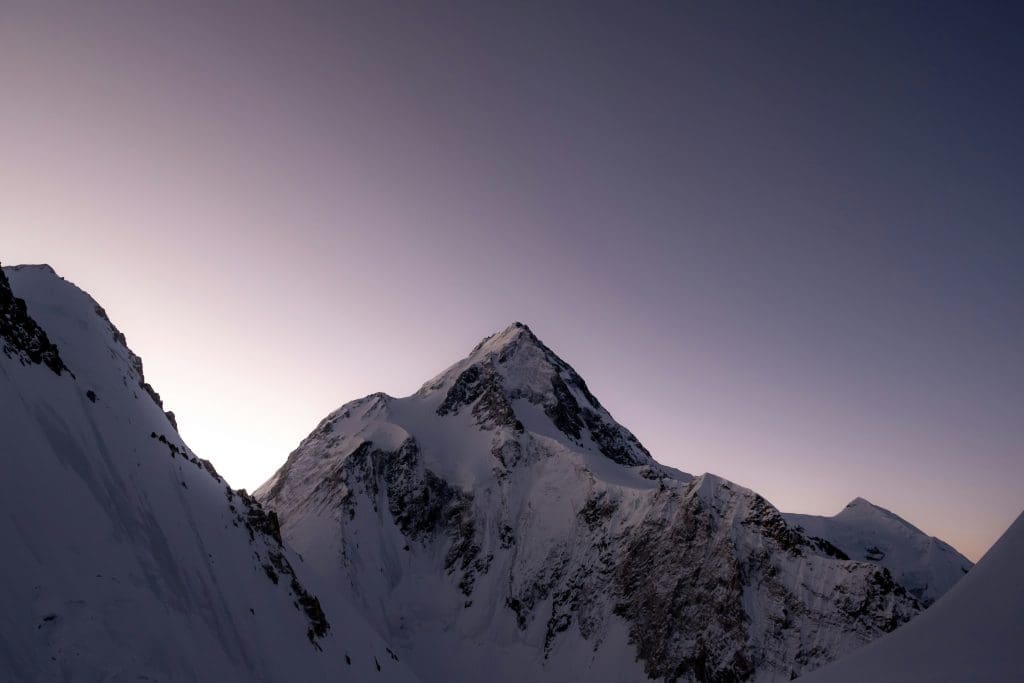
Gasherbrum I is also known as K5 and Hidden Peak, a name given by William Martin Conway in 1892 in reference to its extreme remoteness. It is also the 11th-tallest mountain in the world, and the second-highest in the Karakoram Range.
Gasherbrum I is one of the four 8,000-meter peaks located in a tight cluster on the upper reaches of the Baltoro glacier, the main access route to the mountains, and cuts through the center of the Karakoram Range.
Country: China and Pakistan
Height: 8,051 meters (26,414 feet)
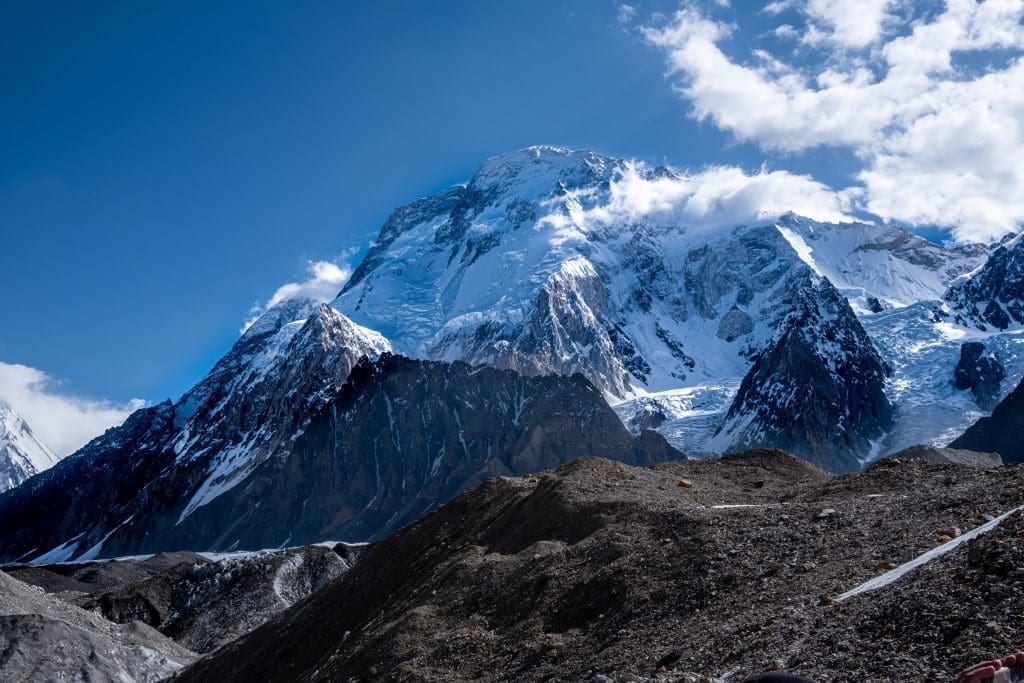
This giant is known as Broad Peak due to its broad summit. It has also been called the Enormous Tripe-Headed Breithorn of the Baltoro.
Within the climbing community, there has been debate as to whether Broad Peak’s central peak should be considered a separate mountain and be granted a spot as the world’s 15th eight-thousander. While scientific standards do not support the mountain’s classification at this time, geographers believe that climate change could alter the Karakoram mountain range so much that it could be a separate formation in the future.
Country: China and Pakistan
Height: 8,025 meters (26,362 feet)
Along the same horseshoe-shaped ridge as Gasherbrum I (which is just 151 feet taller), Gasherbrum’s second-tallest peak is also the 13th-tallest mountain in the world. At 26,362 feet above sea level, Gasherbrum II has the second-lowest fatality rate of the world’s eight-thousanders, resulting in some pretty adventurous activities, including skiing, snowboarding, parachuting, and hang-gliding down from the summit.
Country: Tibet
Height: 8,027 meters (26,335 feet)
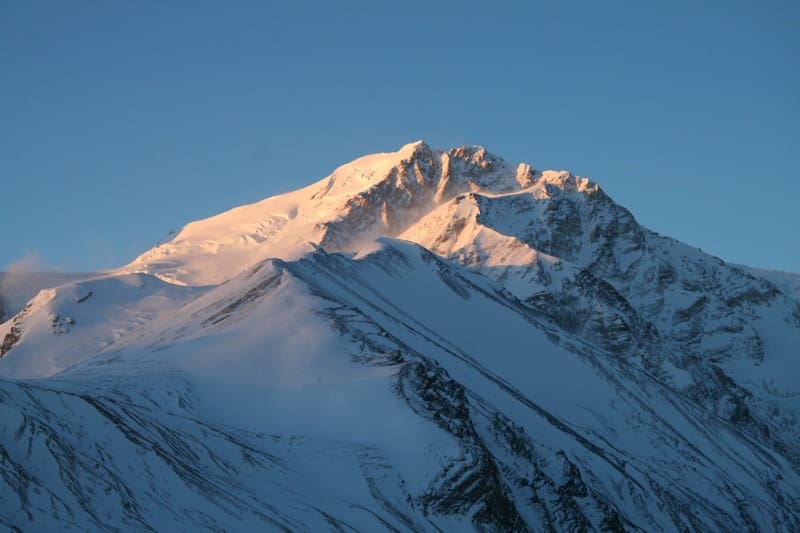
Shisha Pangma, also called Gosainthān, is the highest peak in the Langtang Himal and is located almost due north of Kathmandu, entirely on the Tibetan side of the Himalayas. It is located on the Tibetan side of the Himalayas and has seen at least 302 successful ascents between 1964 and 2012.
Although it’s considered to be another one of the easiest and shortest of the 8000-meter mountains, Shishapangma claimed the life of one of the world’s most famous climbers, Alex Lowe, after an avalanche struck on October 5, 1999 (his body wasn’t recovered until 16 years later).
Country: Nepal and China
Height: 8,027 meters (26,335 feet)
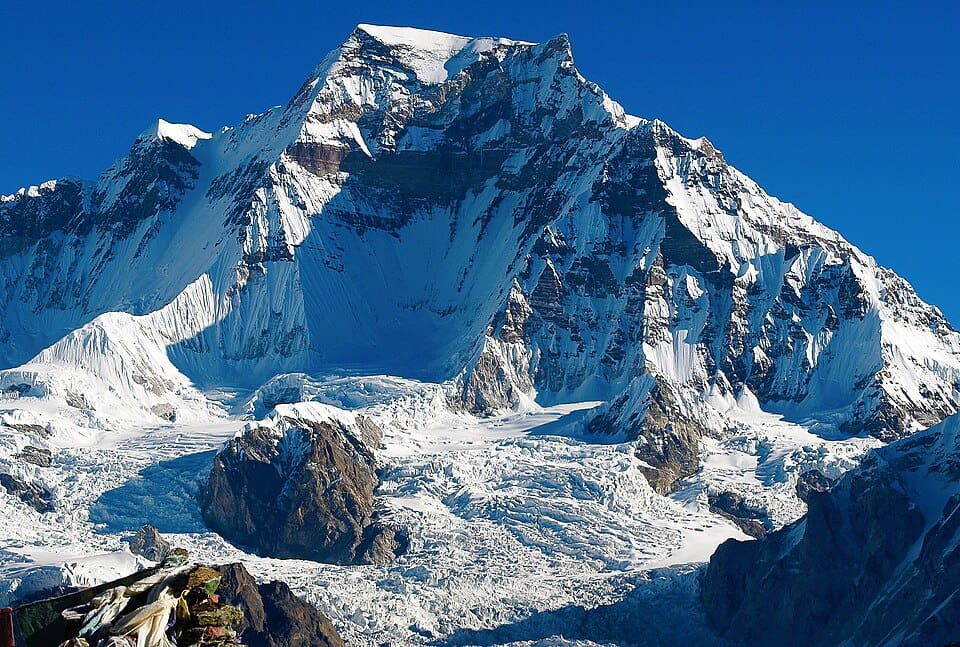
Gyachung Kang is a majestic and stunning mountain located in the western Himalayas, on the border between Nepal and the People’s Republic of China. At 26,089 feet, the mountain is the 15th-highest peak in the world.
Gyachung Kang is part of the Mahalangur Himal massif, located near Mount Everest
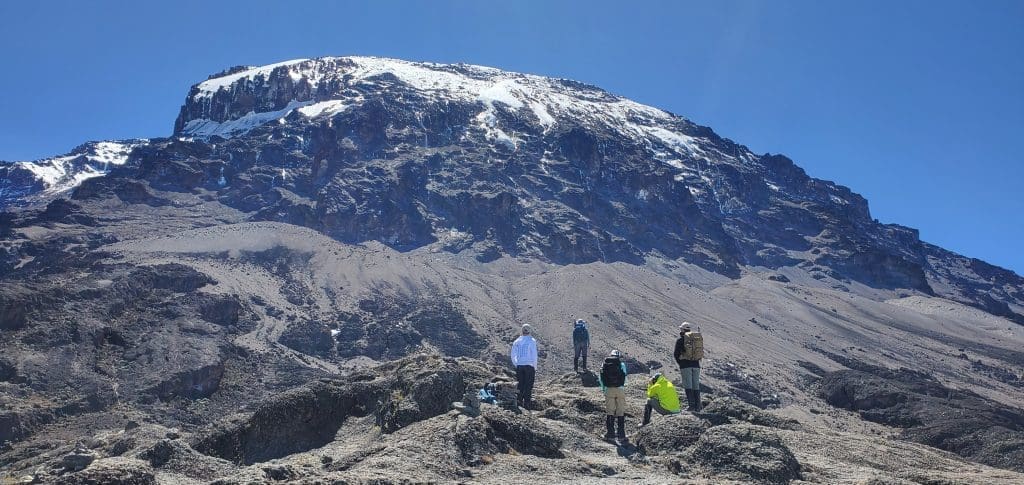
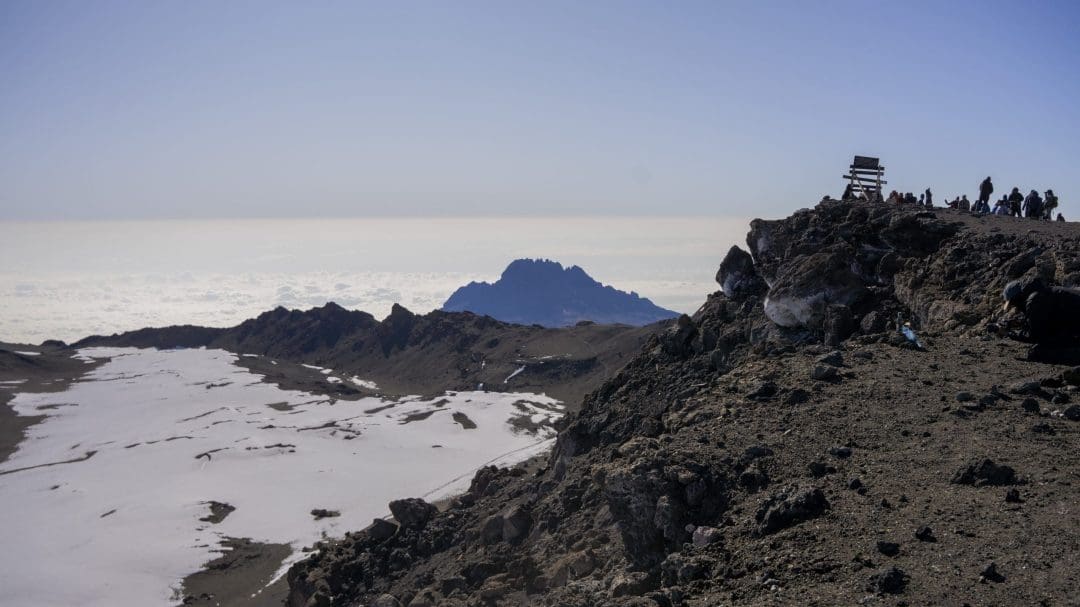
Mount Kilimanjaro is the highest peak in Africa, with three volcanic cones: Shira, Kibo, and Mawenzi. The mountain is a dormant volcano in Tanzania with a summit of 5,895 meters (19,341 feet) above sea level. While Mt. Kilimanjaro is an imposing mountain, it doesn’t measure up to the Himalayas or other mountain ranges in Pakistan, China, Nepal, and other areas of Asia. Asia holds the record for the highest peak. Although over 200 mountains in the world are taller than Africa’s Mount Kilimanjaro, it’s still imposing as the tallest free-standing mountain in the world. Mount Kilimanjaro is not often considered one of the world’s tallest mountains, but it stands tall among the Seven Summits.
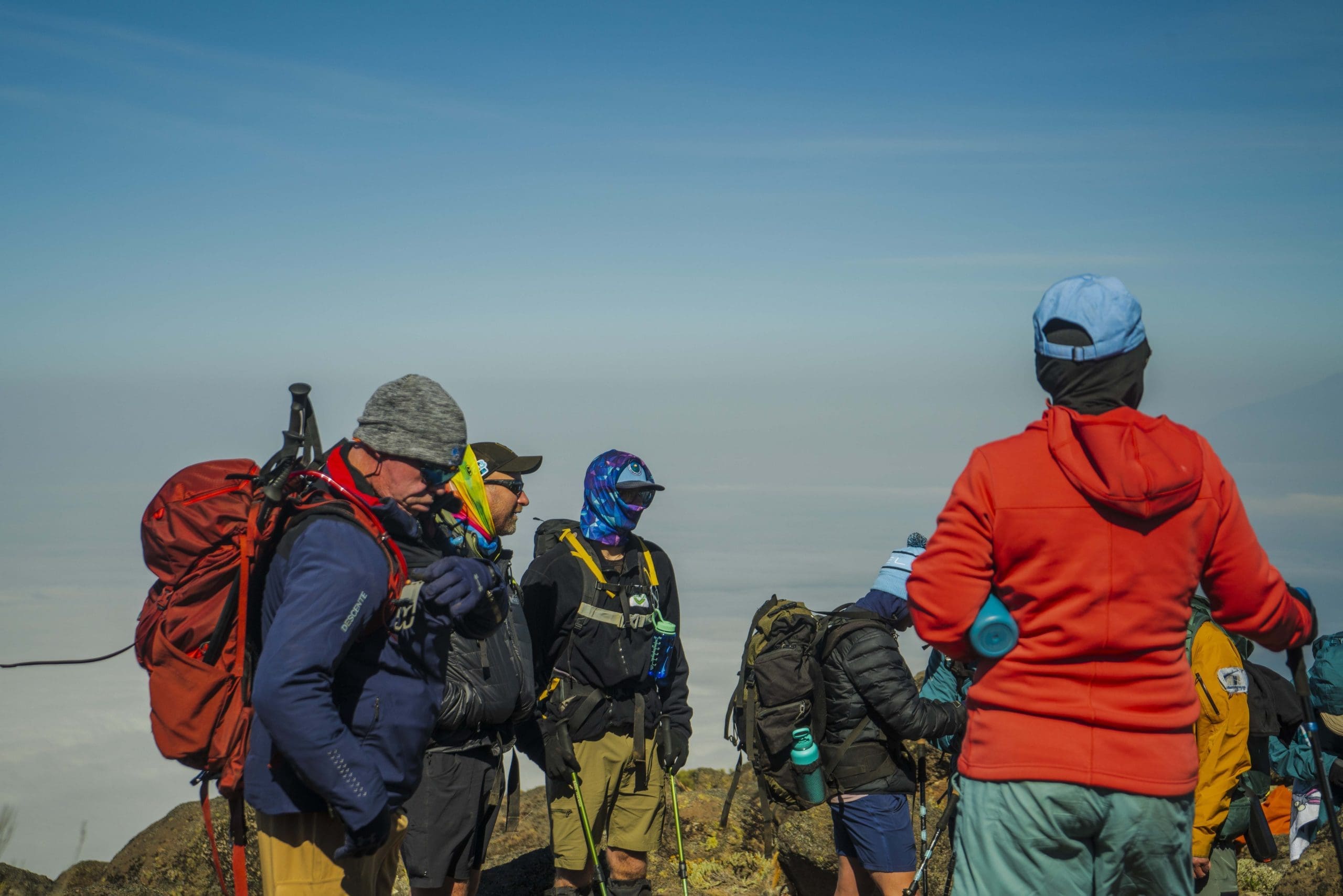
If you’re looking to conquer mountain tops and experience incredible adventures, join us on one of our Mount Kilimanjaro trekking trips! Our expert guides can help you achieve your goals while providing an unforgettable experience. If you’d like to learn more, contact us today, and we’ll help you get started!
For climbers interested in learning about other U.S. summits, check out: The 10 Tallest Mountains in the Continental United States.
The term “eight-thousanders” refers to the 14 mountains in the world that are over 8,000 meters (26,247 feet) in elevation. These peaks are all located in the Himalayas and the Karakoram Range across Nepal, China, Pakistan, and India. They include: Everest, K2, Kangchenjunga, Lhotse, Makalu, Cho Oyu, Dhaulagiri, Manaslu, Nanga Parbat, Annapurna, Gasherbrum I, Broad Peak, Gasherbrum II, and Shishapangma.
While Mount Everest is the tallest mountain in the world when measured from sea level, the tallest mountain in the world underwater is Mauna Kea in Hawaii.
From its base on the ocean floor to its summit, Mauna Kea measures about 10,210 meters (33,500 feet), nearly a mile taller than Everest.
The Makhonjwa Mountains, also known as the Barberton Greenstone Belt, located in South Africa, are believed to be the oldest mountain range in the world, with rock formations dating back 3.2 to 3.6 billion years.
No, Mount Kilimanjaro is not taller than Mount Everest.
Kilimanjaro, located in Tanzania, rises to 5,895 meters (19,341 feet), making it the highest mountain in Africa, but it is still significantly shorter than Everest’s 8,848.86 meters (29,031 feet).
However, Kilimanjaro is the world’s tallest free-standing mountain, meaning it stands alone rather than as part of a range and offers one of the most iconic climbing experiences on Earth.
















TripAdvisor Award


WhatsApp us