

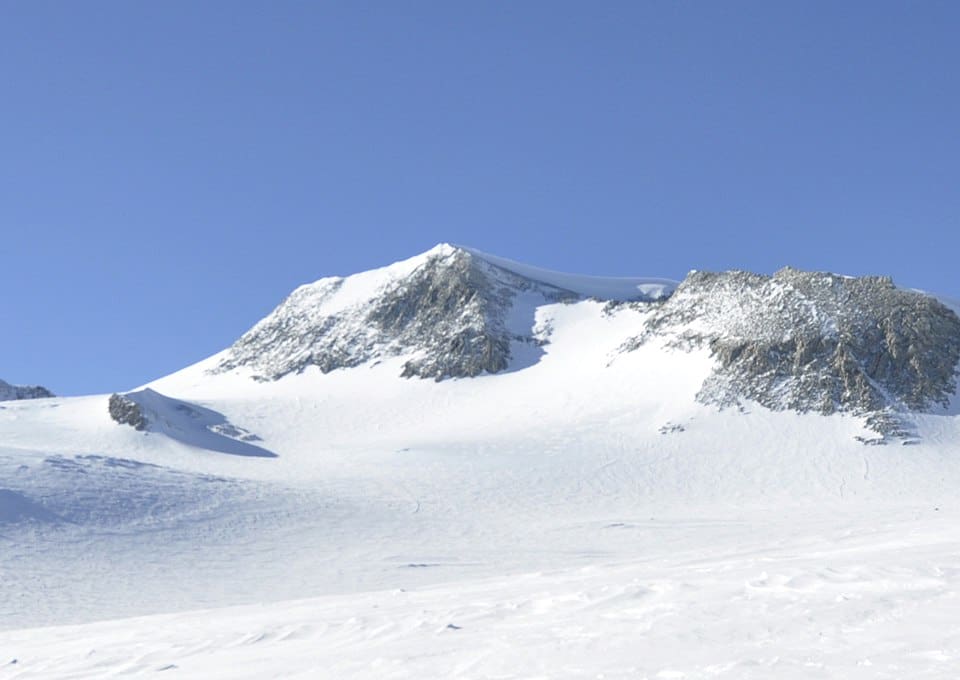
Located in the world’s coldest continent, Mount Vinson is the tallest mountain in Antarctica. It is on the coldest continent, about 600 miles (970km) from the South Pole. Mount Vinson is 4,892 meters (16,050 feet) above sea level. It is the sixth-tallest mountain of the Seven Summits.
Mount Vinson was first sighted in 1957 by a US Navy reconnaissance flight. The mountain was identified and named in 1958 after Carl Vinson, a native of Georgia. This U.S. Rep advocated the exploration that led to the Mount’s discovery.
What Is Mount Vinson's Weather Like?
Antarctica is not just cold; it is the driest, windiest, and iciest continent in the world. This unique weather pattern suggests that Mount Vinson experiences consistently low temperatures, strong surface winds, and minimal precipitation throughout the year. During winter, the mountaintop temperature ranges from −50°F (-45.6 °C) to −80°F (-62 °C). Summer is characterized by periods of continuous daylight because the continent is tilted towards the sun for several weeks. Despite the sun, the temperatures remain extremely cold, ranging from -20°F (-29°C) to -30°F (-34°C). The highest peak in Antarctica is known for its white deserts, blizzards, and wind chills.
What Is Mount Vinson's Geography Like?

A fantastic feature of the tallest peak in Antarctica is the numerous glaciers that surround the peak. Ice formed from snow accumulates into glaciers. These glaciers follow the mountain’s topography, forming steep ridges and dramatic icefalls. Some of the named glaciers include Branscombe Glacier, Roche Glacier, and Jacobsen Valley Glacier.
They flow at varying speeds depending on the slope or mountain temperature. For example, Jacobsen Valley Glacier flows along the western slopes of this mountain, connecting to the vast Antarctic ice sheet.
The Antarctic ice sheet is another notable part of Vinson’s geography. The ice sheet is the world’s largest freshwater body on Earth. It is composed of 90% ice and 68% freshwater.
Mount Vinson is not a standalone mountain. It rises among other peaks in the Ellsworth Mountains. The Minnesota glacier divides the Ellsworth range into two sub-ranges, the Sentinel Range in the north and the Heritage Range in the south. The highest mountain in Antarctica is located in the Sentinel Range. Mount Tyree stands out as the second-highest mountain. It is 4,660 meters (15,292 feet) above sea level.
How Many Climbing Routes Are On Mount Vinson?

Climbing Antarctica’s tallest peak begins with a flight from Punta Arenas, in Chile, to the Union Glacier Camp. Union Glacier Camp is a temporary base located about 120 kilometers (75 miles) from Mount Vinson.
From Union Glacier camp, climbers may choose to trek to the base camp. This route involves traversing the heavily crevassed glaciers of the Vinson Massif. Many climbers opt for ski aircraft instead of trekking. Once at the base of the mountain, either the Branscombe Glacier Route or the Ridge Route is followed to the top.
Vinson Base Camp
This base camp is situated on the Branscombe Glacier, at an elevation of 2,140 m (7,021 ft). The Branscombe Glacier is the most commonly used climbing route, and climbers prefer it for its relatively low technical difficulty. On the other hand, the Ridge route features snow slopes and icy ridges. It is less direct and requires a more technical navigation of crevasses and icefalls. Vinson Base Camp typically allows climbers to acclimate and prepare for the climb ahead.
Low Camp
The next stop on the ascent of Mount Vinson is the low camp, situated at an elevation of 2,780 m (9,121 ft). It is a gentle climb through deep snow and ice. The climb takes 4-6hours, where climbers can carefully transport about 18-22 kg of load upwards. At the low camp, climbers can rest, eat, or sleep in cached sleeping tents.
High Camp
When the sun hits the tents at the low camp, climbers set out for the high camp. The high camp is located at 3,780m (12,502ft), 1,000m above the low camp. It takes approximately 6 to 8 hours to reach the high camp. There is another shelter at the high camp, where climbers can rest and acclimatize again before the final summit. The shelter is necessary for protection from the cold and wind. The final climb takes 4-6 hours, during which the top is reached via fixed ropes. At the summit, climbers enjoy the scenic views of the subranges and other peaks in the Ellsworth range.
What is the Best Time to Climb Mount Vinson?
The best time to climb is in summer, from late November to early January. During this period, temperatures are milder, with 24 hours of daylight on most days. The less severe temperatures help to stabilise ice for safer travel. Additionally, the Union Glacier Camp is only accessible during the summer months.
How Long Does It Take To Climb The Highest Mountain In Antarctica?
A round trip on the tallest mountain in Antarctica takes 12-14 days. The climb begins with a flight to Vinson base camp, which is usually completed over five to six days. Climbers then spend 1-2 days from the base camp through the low and high camps to the summit.
What Are Some Interesting Facts About Mount Vinson?

Despite the extreme cold and icy conditions, a few adventurers attempt the endurance climb year after year. Here are five interesting facts about this peculiar mountain.
1. Seas surround Mount Vinson
The Southern Ocean surrounds the entire mountain. The Southern Ocean connects to the Atlantic, Indian, and Pacific Oceans. Due to the cold temperatures, the seas are usually frozen, forming ice shelves. From the top, you can see several floating extensions of the ice sheet where the glaciers meet the sea.
2. The First Successful Ascent Was In 1966
The tallest mountain in Antarctica was first successfully climbed on December 18, 1966. The team was led by Nicholas Clinch, including Barry Corbet, William Long, John Evans, Brian Mart, and Pete Schoeningon. This American expedition lasted from December 1966 to January 1967. This makes Mount Vinson the last of the Seven Summits to be climbed.
3. There Are Five Other Tall Mountains In Antarctica
The Ellsworth range houses five other summits: Mount Tyree, Mount Shinn, Mount Epperly, Mount Craddock, and Mount Gardner. These mountains, together with Vinson, are collectively referred to as Vinson Massif. Vinson Massif measures 21 kilometers in length and 13 kilometers in width. Together, it is an immense landmass with steep peaks and deep valleys filled with glaciers.
The Lowest Temperature Recorded In Antarctica is −128.6°F (−89.2 °C)
Antarctica recorded a temperature of −128.6°F (−89.2 °C) on the high inland ice sheet. This temperature is the world’s lowest temperature. It was recorded at Vostok Station on July 21, 1983. Vostok Station is a remote Russian research outpost located in East Antarctica. The winter season records the lowest temperatures. As such, climbers do not attempt it in winter.
The Highest Temperature Recorded In Antarctica is 63.5⁰F (17.5⁰C)
The highest temperature recorded at Antarctica is 63.5⁰F (17.5⁰C) in March 2015 at Esperanza Base. Esperanza Base is an Argentine research station located on the northern tip of the Antarctic. Also in February 2020, a temperature of 65°F (18.3 °C) was recorded at the same base. Such warmth is rare and usually short-lived. However, the sun shines throughout this short summer period.
Is The Vinson Massif Hard To Climb?
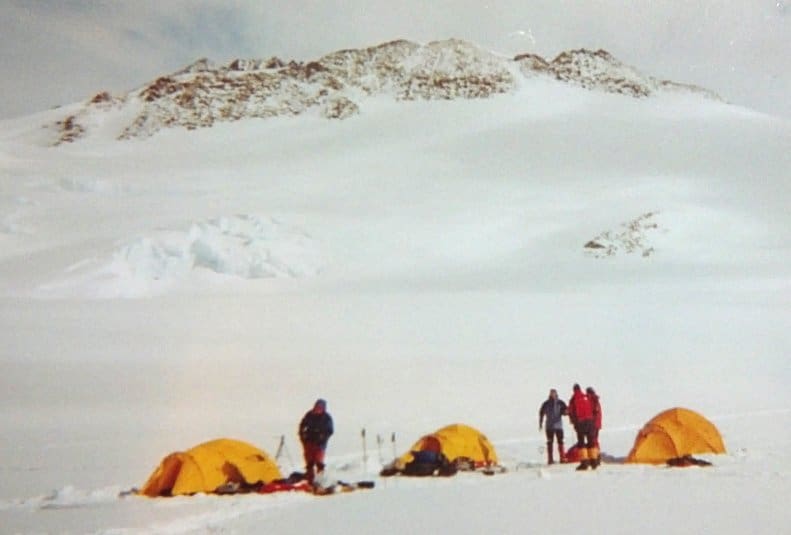
Climbing Mount Vinson is challenging. The difficulties lie in the extreme cold, which can drop to −80°F (-62 °C). This extreme exposes climbers to climatic conditions that can cause frostbite. Another challenge is the heavily crevassed glaciers along the mountain paths. The ascent is along steep ice slopes that are prone to dangerous icefalls. You first have to acquire technical skills in snow and ice climbing to navigate successfully. Additionally, you need to spend several days acclimating to the polar environment. Aside from the weather and technical climbing skills, the highest mountain in Antarctica is remote and rugged to reach.
The weather on Antarctica’s tallest peak is highly unpredictable. During each climb, guides closely monitor the conditions. They will inform you if the expedition needs to pause or stop because of sudden weather changes.
What Is The Climbing Success Rate?
As one of the most remote mountains on Earth, fewer than 2,000 climbers have made an expedition to Mount Vinson. Yet, its success rate is impressively high, at 90%. The 10% who do not reach the top are hindered by frostbite or minor slips on the frozen terrain. Remarkably, despite the harsh conditions, there have been no recorded deaths to date.
What Is The Difference Between Mount Vinson And Other World Summits?

The highest peak in Antarctica was the last of the seven summits on Earth to be discovered and climbed. Unlike the other world summits, Mount Vinson is characterized by a harsh polar climate. The ice falls and wind chills require climbers to prepare to travel through these exposed areas.
While other summits are relatively accessible, climbing them is as challenging as an expedition to Vinson. Vinson is the sixth-tallest mountain among the Seven Summits. This suggests that the technicality is not related to the high-altitude climb, but rather to the presence of glaciers. Also, while other summits have multiple climbing windows, Mount Vinson can only be climbed during summer, late November, and early January.
How Does Mount Everest Compare To Mount Vinson?
Mount Everest rises 8,848m (29,032ft) above sea level. It is twice as tall as Mount Vinson, which stands at 4,892 meters (16,050 feet) in height. Because Mount Everest is taller, climbers are more likely to experience altitude sickness. Some individuals may require supplemental oxygen to climb because the higher you go, the less oxygen is available for breathing. The Vinson expedition, on the other hand, does not require supplemental oxygen. There are approximately 20 climbing routes to Everest, but only one standard route to reach the summit of Mount Vinson.
How Does Mount Kilimanjaro Compare to Mount Vinson?
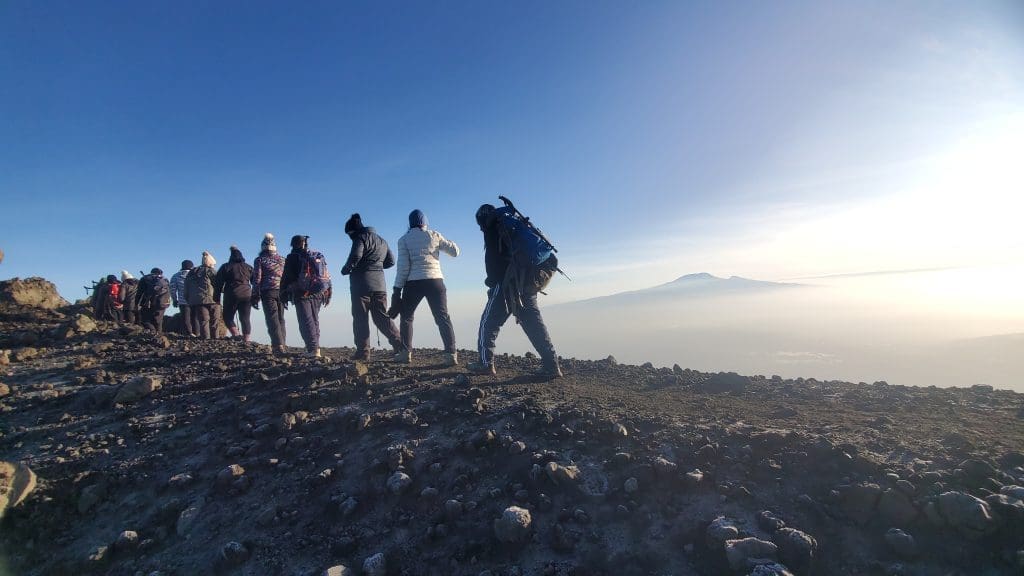
Kilimanjaro is over 1,000 meters taller than Mount Vinson. Climbing Kilimanjaro requires a certain moderate level of skills and training. Beginners can reach their peak with simple mountaineering skills. However, Mount Vinson climbers need ice climbing skills to navigate. They need to learn how to use equipment such as ropes, ice axes, and crampons. While a round trip to Vinson can take up to 14 days, climbing Kilimanjaro typically takes five to ten days.
Other Frequently Asked Questions
1. Has Anyone Climbed The Highest Mountain In Antarctica?
Yes. After Nicholas Clinch led his six-man team for the first ascent in 1966, almost 2,000 climbers have attempted it. Mount Vinson remains the most exclusive and least visited mountain in the world.
2. How Much Does It Cost To Climb Mount Vinson?
The cost to climb the tallest Antarctic peak ranges from $50,000 to $60,000 USD. Different tour companies offer several packages that cover guides, logistics, permits, and chartered flights. The price increases as you add accommodation, feeding, insurance, and equipment costs.
3. Is Mount Vinson The Coldest Peak?
Mount Vinson is recognized as the coldest peak on Earth. This is due to its location in Antarctica, the world’s coldest continent. The temperatures on the tallest mountain in Antarctica can drop as low as −58°F (−50 °C) in summer, accompanied by strong winds, snow, and ice formation.
4.Has Anyone Died Climbing The Vinson Massif?
To date, no deaths have been reported. However, climbers who do not reach the peak turn back due to severe frostbite and other cold-related injuries.