

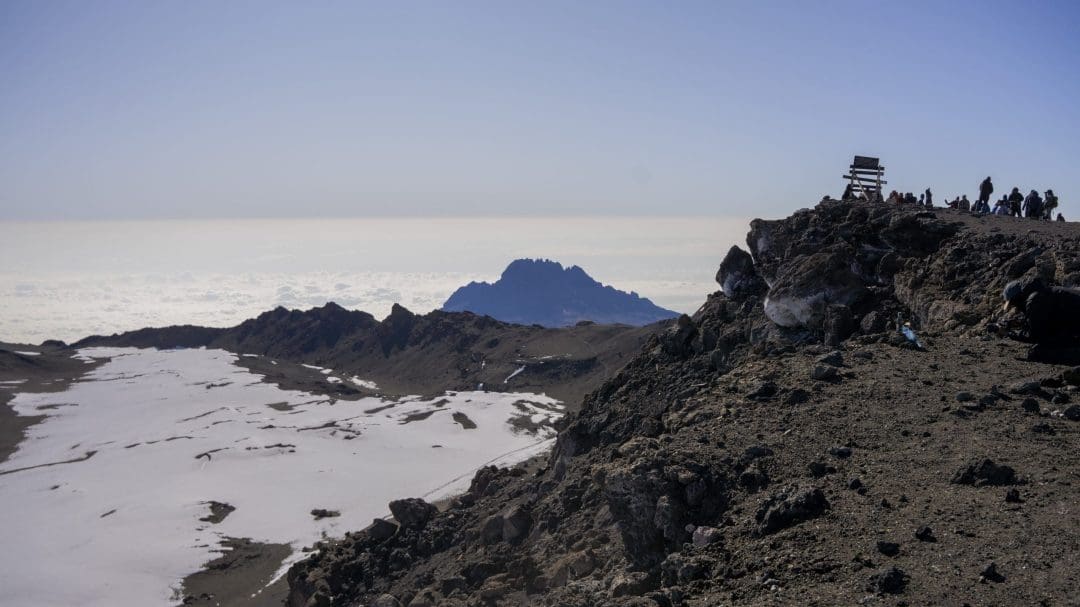
Mount Kilimanjaro is one of the most popular summits people dream about climbing every year. Climbing this peak (5,895 metres high) is, however, not an easy task. It’s not only the mountain’s height or the steep paths while going up or down that are challenging; the weather on Mount Kilimanjaro can also affect your chances of successfully summiting.
When it comes to the tallest mountain in Africa, proper preparation is key to success, including knowing what to expect from the mountain’s weather. Kilimanjaro is located near the equator, and unstable weather systems strongly influence the temperature at higher elevations.
What Makes The Weather On Mount Kilimanjaro Unique?
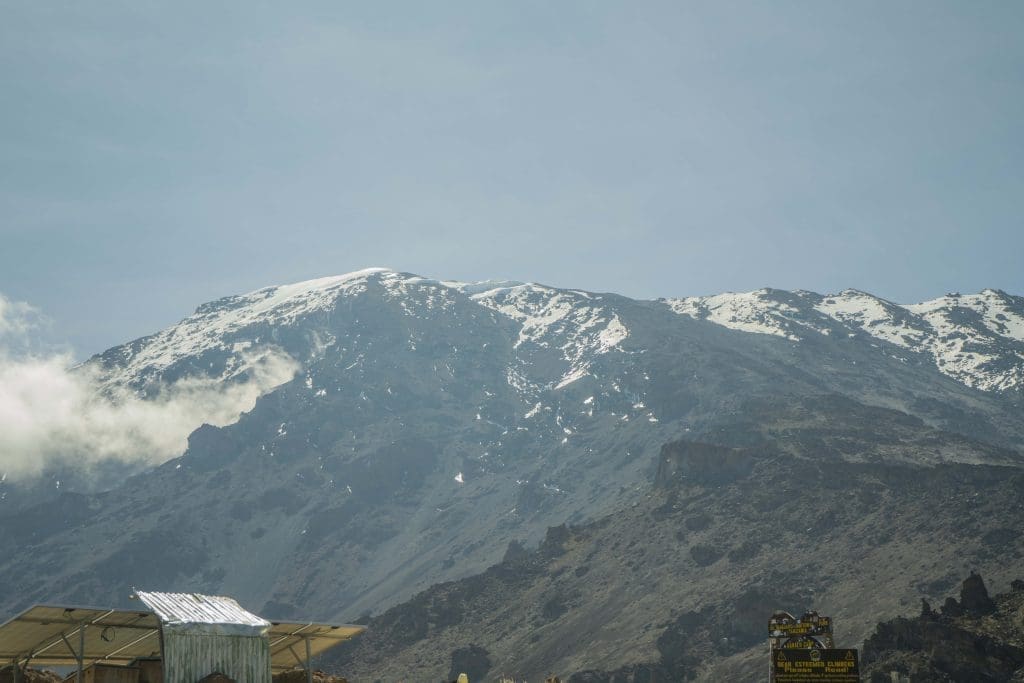
Mount Kilimanjaro rises so high above sea level that it generates its own weather patterns.
Unlike most mountains, Mount Kilimanjaro’s temperature varies with the time of year, not the seasons. As you go up the mountain, temperatures change rapidly, from warm temperatures at the base to freezing weather at the summit in a matter of days.
Kilimanjaro is near the equator, and for this reason, the Indian Ocean trade winds hit the mountain and provide moisture. As you climb the mountain, damp air rises and condenses, resulting in rain and, to many people’s surprise, snow. This brings us to a frequently asked question below.
Does Kilimanjaro Have Snow?
In contrast to the fact that Kilimanjaro is close to the equator, snow can be found on the mountain. The mountain is so high that glaciers and snow can survive near the top. The highest part is called the Arctic Zone for a reason.
You are most likely to see snow on Kilimanjaro during the wet seasons. In April or November, there is a higher chance of finding fresh snow at the summit. However, snow can fall at any time of year.
Additionally, the weather on the mountain changes quickly. You might start your day with clear skies and end up in a snowstorm just a few hours later.
Every year, the glaciers on Kilimanjaro get smaller. Scientists believe they could be gone in the next few decades, so if you get to see the snow and ice on the crater rim, consider it a special experience.
Kilimanjaro's Five Climate Zones
There are five climate zones on Mount Kilimanjaro, each with its own weather patterns. Here’s what you can expect as you go higher up the mountain:
1. Cultivation Zone (800 to 1,800 meters)
The cultivation zone is located at the base of Kilimanjaro. It is a zone characterised by human settlements and extensive farmland. The weather in this zone is mild, with temperatures ranging from 21 to 27 degrees Celsius (70 to 80 degrees Fahrenheit). There is also plenty of rain, which helps the crops in this area grow and makes the land fertile.
2. Rainforest Zone (1,800 to 2,800 meters)
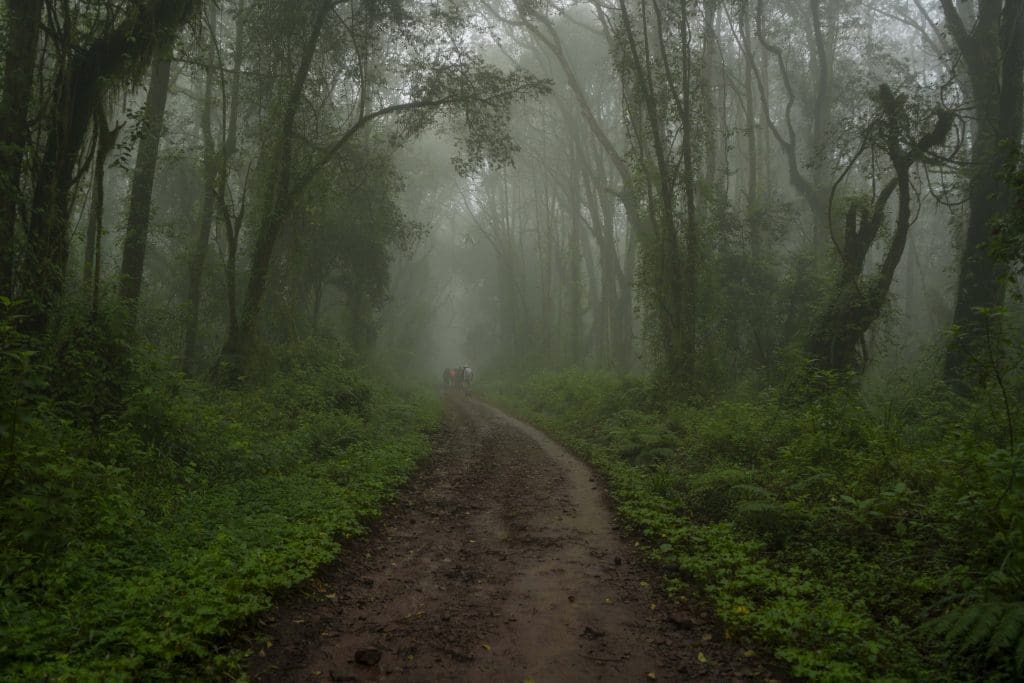
Next is the rainforest zone. It’s warm and humid here, so you’ll often see mist and clouds. The thick trees absorb a lot of water, and this area receives about 2,000 millimetres of rain each year.
3. Heath and Moorland Zone (2,800 to 4,000 meters)
After the rainforest zone, the scenery changes to open moorland with tall grasses and big heather plants. It’s cooler in this zone, and it can drop close to freezing at night. Hiking is more comfortable during the day because the temperature is usually between 10 and 15 degrees Celsius (50 to 59 degrees Fahrenheit). It is also in this zone that climbers begin to experience symptoms of altitude sickness on Kilimanjaro.
4. Alpine Desert Zone (4,000 to 5,000 meters)
The Alpine desert zone is dry and tough, with large temperature swings. It can feel warm in the sun during the day, but it becomes very cold at night, often below freezing. There’s not much rain here, only about 250 millimetres a year. The air is thin, and the wind can be strong, so you’ll need to dress in layers to stay comfortable.
5. Arctic Zone (Above 5,000 meters)
At the top of Kilimanjaro, it feels like you’re in the Arctic. In this zone, temperatures at night can drop to -7 to -29°C (-20 to -20°F), and the wind can make it feel even colder. At this height, there’s only about half as much oxygen as at sea level, so every step is harder.
What Is The Temperature At Mount Kilimanjaro Throughout The Year
January and February: The Short Dry Season
January and February are the best months for climbing Kilimanjaro. The weather is mostly clear and stable, except for minimal rainfall. Although there is snow atop Kilimanjaro year-round, you are likely to see fresh snow during these months, allowing for great pictures. Routes around this time are less crowded with tourists, making it perfect for those who prefer a peaceful experience.
March to May: The Long Rainy Season
In mid-March, the southeast trade winds from the Indian Ocean bring heavy, moist clouds. This is the wettest time on the mountain, especially on the southern slopes. Rain is usually heaviest from Monday to Friday during peak season, but the timing can change each year. The most recommended route to climb Kilimanjaro during this season would be the Rongai route from the north side. The reason is that the mountain creates a rain shadow, creating a drier, warmer (and thus safer) climbing environment. There are also fewer climbers during this season.
June to September: The Long Dry Season
June–September is the most popular time of year to climb Kilimanjaro. During this period, Kilimanjaro’s weather is very stable, with little rain and clear skies. Daytime temperatures are comfortable for hiking, but nights are still cold at higher altitudes. Winds are usually light, making it a perfect time for summit attempts. However, the trails can get crowded, especially in July and August when many people are on summer holidays. It is advisable to book your trip in advance.
October: Transition Month
The shoulder season, which falls between the busiest and quietest seasons, offers mostly excellent weather in October. The trails are clearer, and there are fewer climbers, but conditions are still fairly dry. Some moisture returns to the air, but heavy rain is still rare.
November: The Short Rains
The Northeast Monsoon brings lighter rain than the long rainy season in April and May. Afternoon showers often happen at lower elevations, but above 3,000 metres, it stays mostly dry. The northern routes usually have the best weather in November. There are fewer climbers because most people avoid climbing the mountain during this period.
December: Cold and Clear
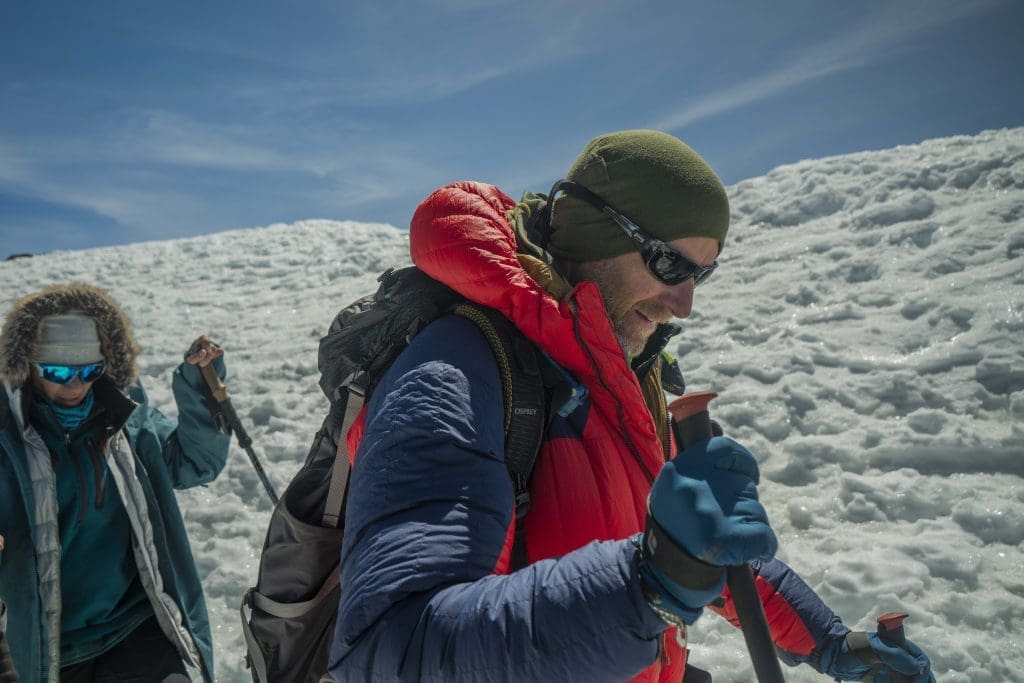
December is colder, especially at the summit, where snow is common. Many climbers pick this month for the special experience of reaching Uhuru Peak during the holidays. The freezing temperatures at high camps require good cold-weather gear and proper layers.
How To Use A Weather Map And Forecast Table
With today’s technology, you can check real-time updates for Kilimanjaro weather before and during your climb. The forecast table shows predictions for different elevations. To see the weather at your chosen altitude, use the tabs above the table. Forecasts are updated often and include expected precipitation, wind speed, and temperature.
Keep in mind that mountain weather can change quickly. The forecast for 5,000 metres might be very different from what you find just 500 metres up or down. Regardless of the forecast, it’s crucial to prepare for challenging conditions.
What to Wear For Kilimanjaro's Variable Climate
Proper preparation is essential for your safety, so we’ve created a Kilimanjaro packing list to help you get ready for your summit.
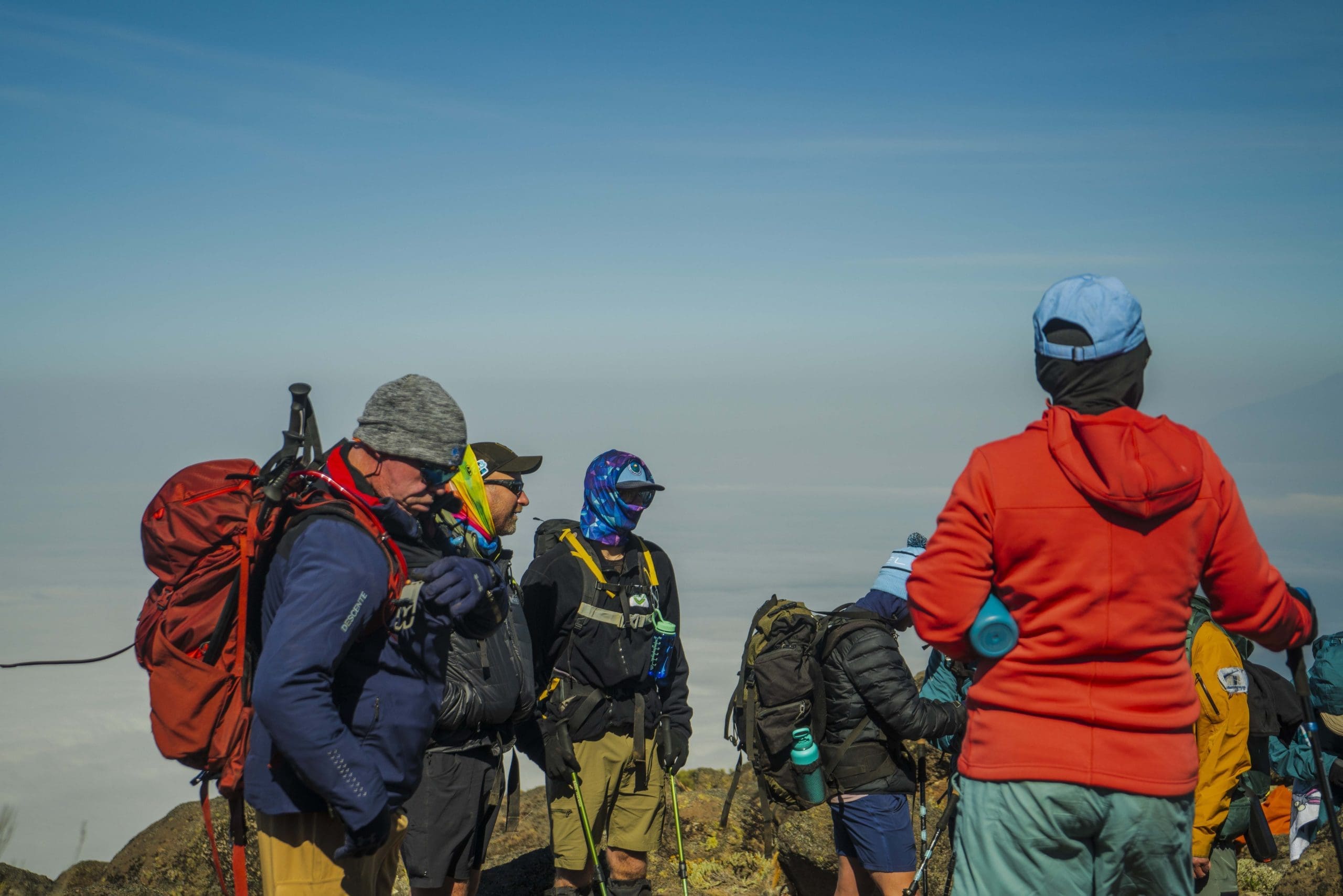
- Base layer: Wear moisture-wicking thermal underwear, both top and bottom.
- Mid-layer: Put on a fleece or soft-shell jacket.
- Insulation layer: Choose a good down jacket with at least 700 fill power.
- Outer shell: Wear a waterproof, windproof Gore-Tex or similar jacket and trousers.
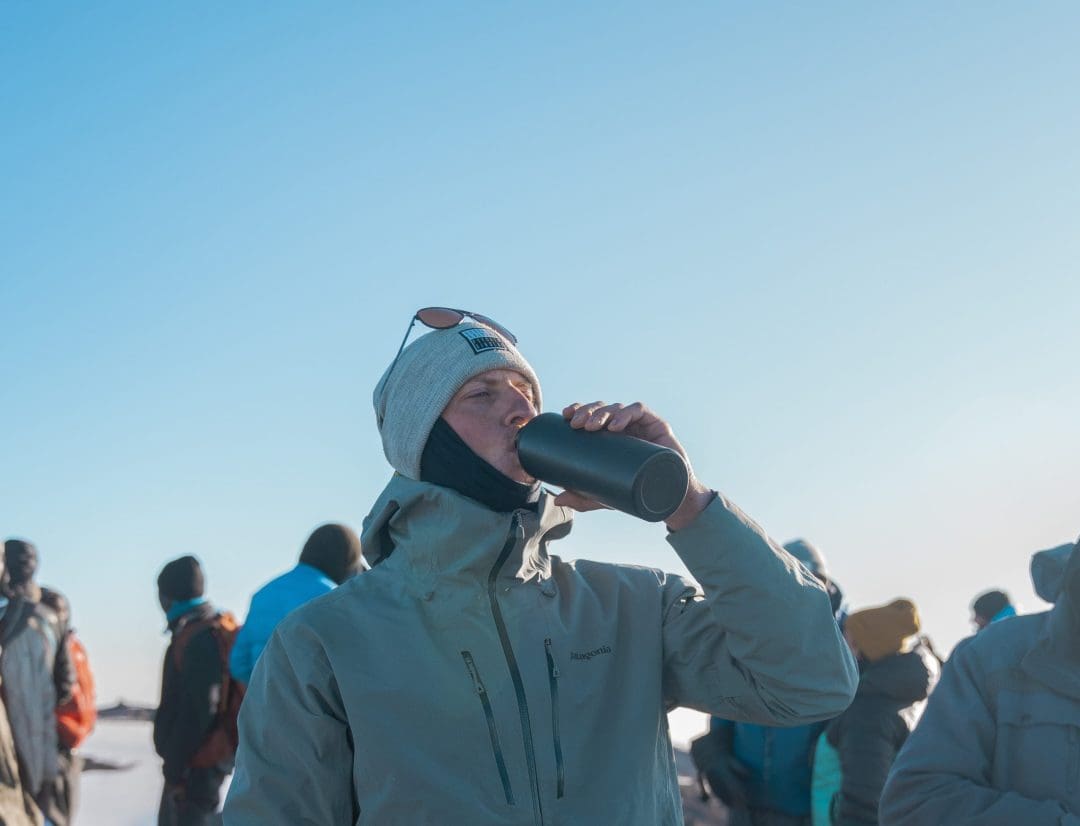
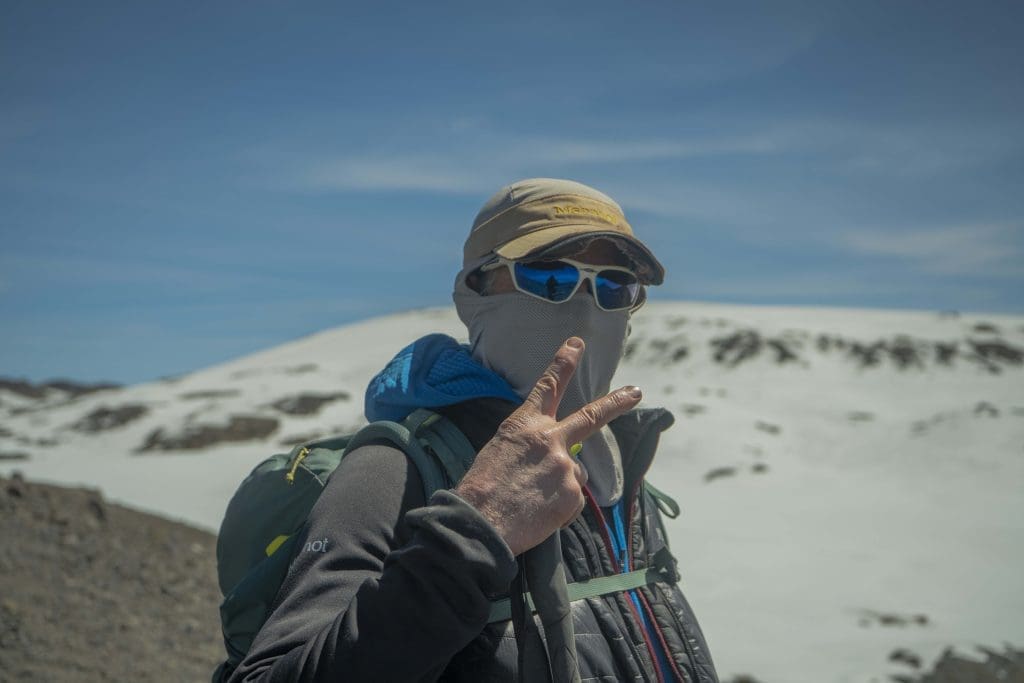
- Head: Bring a warm beanie and a balaclava to protect your face from windburn.
- Hands: Wear liner gloves under heavy waterproof mittens.
- Feet: Use liner socks, thick wool summit socks, and sturdy waterproof boots.
Avoid cotton because it holds moisture and will make you cold. Staying dry and warm in Kilimanjaro’s weather helps reduce your risk of hypothermia.
What Is The Best Time To Climb Mount Kilimanjaro?
The best time to climb Mount Kilimanjaro is between January and February or June and September. If you would rather avoid crowds, try late January or early September. If you want to see the green mountain and don’t mind rain, October is a good time.
In Closing
Kilimanjaro’s weather is unpredictable, but with the right preparation, it becomes part of the adventure rather than a barrier. Knowing what to expect at every zone puts you one step closer to a successful summit.
With the right gear and a trusted guide, harsh conditions on Kilimanjaro can become manageable and make your climb much safer and more enjoyable.
Experienced guides understand how to navigate shifting weather and can help you climb Mount Kilimanjaro as one of the most memorable trips of your life.
Frequently Asked Questions About Kilimanjaro Weather
How Cold Is It At The Top Of Kilimanjaro?
At the summit, nighttime temperatures usually range from -7 to -29 degrees Celsius (-20 to -20 degrees Fahrenheit). Most people start their final climb around midnight, so you’ll be out in the coldest part of the day. Once the sun comes up, the weather can actually feel hot.
What Is the Weather Like In Moshi?
Moshi is located at the base of Mount Kilimanjaro. It is a town that serves as a major gateway for climbers and tourists. It sits at 900 metres above sea level. The climate is warm year-round, with temperatures usually ranging from 20 to 28 degrees Celsius (68 to 82 degrees Fahrenheit).
The warmest months are January and February. April and May bring the most rainfall. From June to September, the weather is driest. Moshi’s weather patterns are a reflection of what you will experience as you climb the mountain.
Do You Need Oxygen At The Top Of Mount Kilimanjaro?
You don’t need extra oxygen to reach Uhuru Peak, and most people make it to the top without it. Still, the air at the summit has only about half as much oxygen as you’d get at sea level, so getting used to the altitude is crucial.