

The summit of Mount Kilimanjaro lies at an altitude of 5,895 meters (19,341 feet), marking the official elevation of Kilimanjaro. It is the highest peak in Africa that attracts global adventurers for a challenge and the lifetime experience of standing above the clouds. Additionally, Uhuru Peak, located at the summit of the dormant volcano, Mount Kilimanjaro, is also known by this name. Geologists estimate that Kilimanjaro formed approximately 360,000 years ago, making it not only a scenic point but also a geological marvel.
But what makes this summit so special? Why do climbers often begin their final ascent at midnight? And what should you expect when aiming for the top?
This guide answers these questions and more for those dreaming of climbing Mount Kilimanjaro or simply curious about the experience.
Where Exactly Is the Summit of Kilimanjaro?
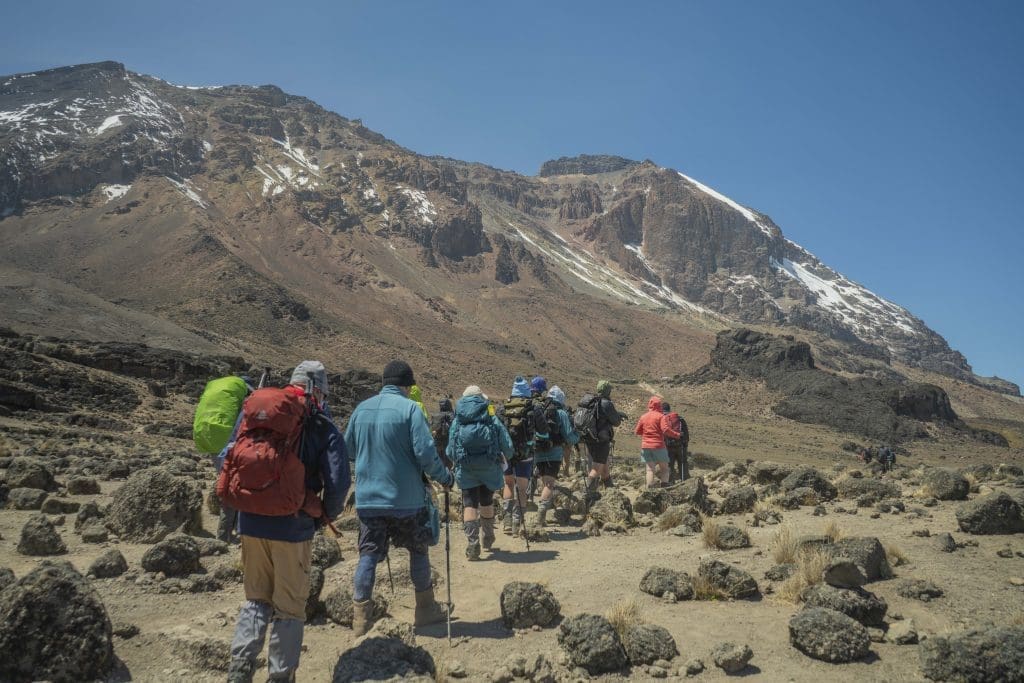
Mount Kilimanjaro has three volcanic cones: Kibo, Mawenzi, and Shira. The summit, Uhuru Peak, sits at the top of Kibo, the tallest and only dormant cone of the mountain. Located near the equator in northeastern Tanzania, the mountain rises from the plain land of Kilimanjaro National Park. It is the highest point in Africa, thus ranking as one of the Seven Summits, the tallest mountains on each continent.
Despite its tropical location, Uhuru Peak is snowy year-round. When climbers reach there, they rise high enough to offer sweeping views over the cloudline that stretches across Tanzania and even into neighboring Kenya on clear mornings.
How Hard Is Summit Night on Kilimanjaro?
One of the most unique aspects of the Mount Kilimanjaro summit experience is that climbers begin their final push to the top in the dead of night. This might sound unusual, but why not rest and hike during the day? This timing serves several essential purposes.
Cooler temperatures at night reduce the risk of altitude-related complications. The body works less to cool itself, conserving energy. Climbers often plan their summit attempt during the dry seasons when visibility is best and trails are more stable. The best time to summit Kilimanjaro aligns with clear weather windows between January to early March and June to October, making conditions more favorable for the final push to the peak.
But perhaps the biggest reward? Sunrise at Uhuru Peak. As dawn breaks, golden rays light up the summit, offering a surreal sight that makes the climb worthwhile. It’s a moment that makes the difficult summit night on Kilimanjaro worth every step.
The lack of oxygen is the biggest challenge. At nearly 6,000 meters, the air contains about half the oxygen you will find at sea level. This makes breathing harder, and even simple movements feel strenuous.
Additionally, temperatures can plummet to as low as -7°C to -29°C (20°F to -20°F) before sunrise. Wind chills make it feel even colder. Many hikers report headaches, nausea, or dizziness due to the altitude.
But there’s good news: proper acclimatization and preparation make all the difference. Taking it slow, staying hydrated, and opting for longer routes, such as the Lemosho or Northern Circuit, can help reduce the risk of altitude sickness.
Summit night challenges both body and mind, but as the first rays of sunlight spill over the horizon and Uhuru Peak comes into view, the reward is unforgettable.

How Long Does It Take to Reach the Summit of Kilimanjaro?
The journey to the summit of Mount Kilimanjaro is not a one-day affair. On average, climbers spend 5 to 9 days ascending, depending on the route and their pace. The duration matters, not just for the distance but for altitude acclimatization. The longer your body has to adjust to the thinning air, the better your chances of reaching the top.
Route Duration Breakdown:
- Marangu Route: 5–6 days
- Machame Route: 6–7 days
- Kilimanjaro Climbing Lemosho Route: 7–8 days
- Rongai Route: 6–7 days
- Northern Circuit: 8–9 days (longest and best for acclimatization)
While it’s tempting to go for a shorter trek, rushing to the summit increases the risk of altitude sickness. Many climbers book guided experiences through trusted operators to ensure a safe and well-supported trek. If you’re planning your adventure, explore our range of Mount Kilimanjaro Tour Packages for professionally organized treks that suit your goals.
Climbers typically begin the final ascent just after midnight, pacing through the cold and darkness to arrive at Uhuru Peak by sunrise, when the view is at its most dramatic.
Standing on Uhuru Peak
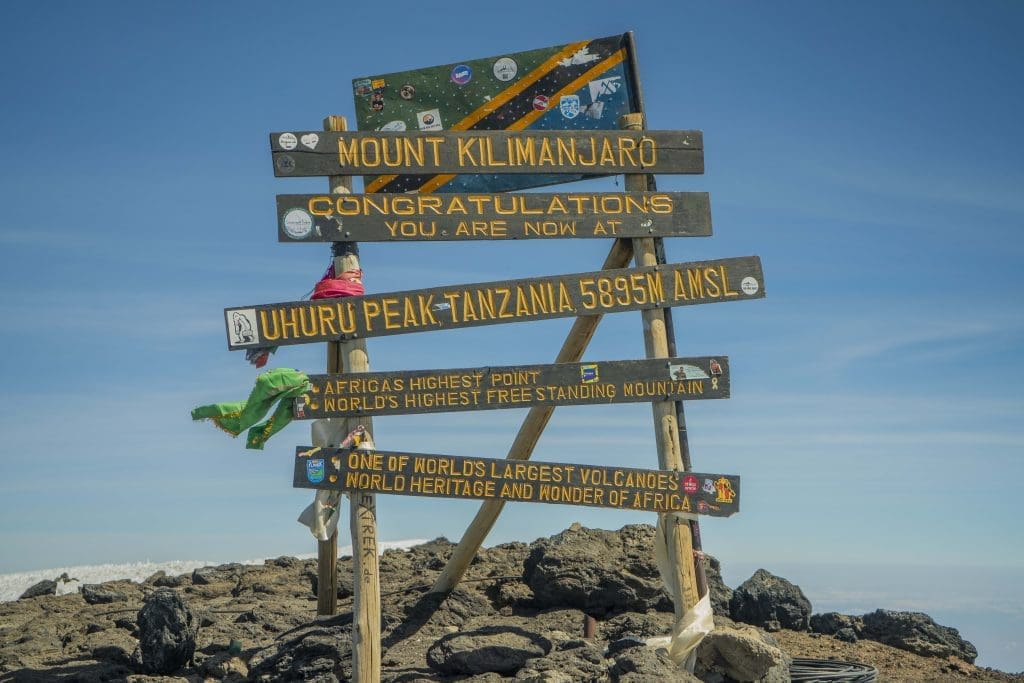
Reaching Uhuru Peak, the official Mount Kilimanjaro summit, is a moment like no other. The air is thin, and the wind bites.
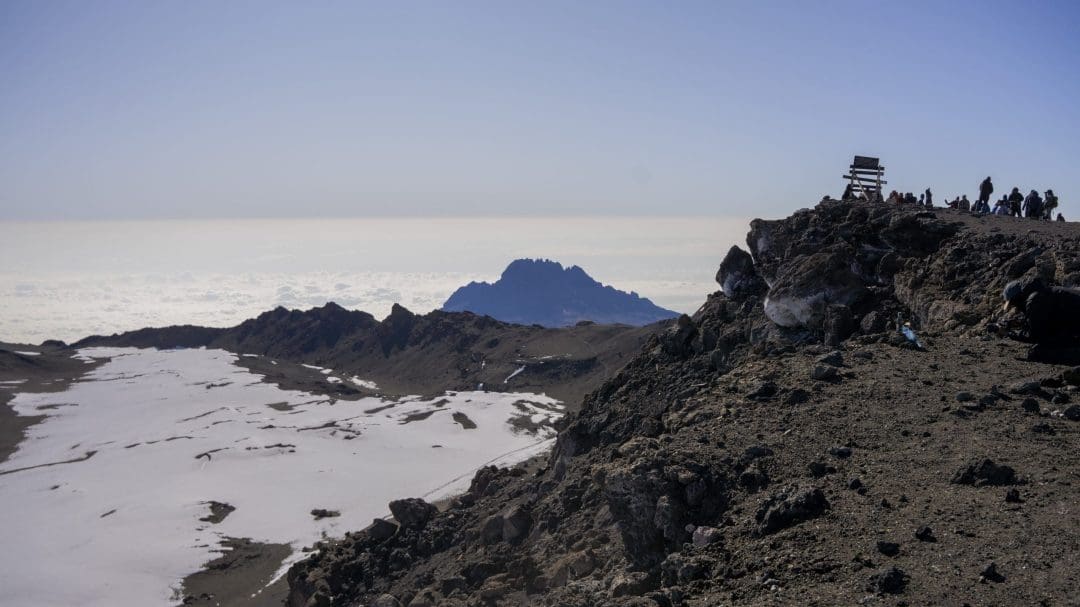
The sun breaks over a sea of clouds, casting soft light across the summit. Across the glaciers, volcanic craters, and expansive plains below. To the west, Mount Meru is visible; to the north, the distant Kenyan landscape lies beyond. For many, this is more than a photo opportunity; it’s the payoff of perseverance.
The summit sign, famous in photos, reads:
“Congratulations! You are now at Uhuru Peak, Tanzania, 5,895m. Africa’s Highest Point. World’s Highest Free-Standing Mountain.”
After hours of climbing in darkness, many trekkers first reach Stella Point (5,756 meters), which sits at the crater rim. From here, it’s about a 45-minute trek along the snowy path to Uhuru Peak. The sun often begins to rise at this point, casting golden light across the summit.
Due to the extreme altitude and cold, most hikers spend only 10–20 minutes at the summit. It’s enough time to soak in the atmosphere, take a few pictures, and maybe shed a joyful tear before starting the long descent.
This fleeting moment at the Mount Kilimanjaro summit stays with climbers for life. It’s a physical achievement, a mental victory, and a spiritual experience all in one. Understanding Kilimanjaro’s elevation is key for acclimatization planning, as altitude impacts energy levels, hydration needs, and summit success rates.
The Role of Guides and Porters During Summit Night
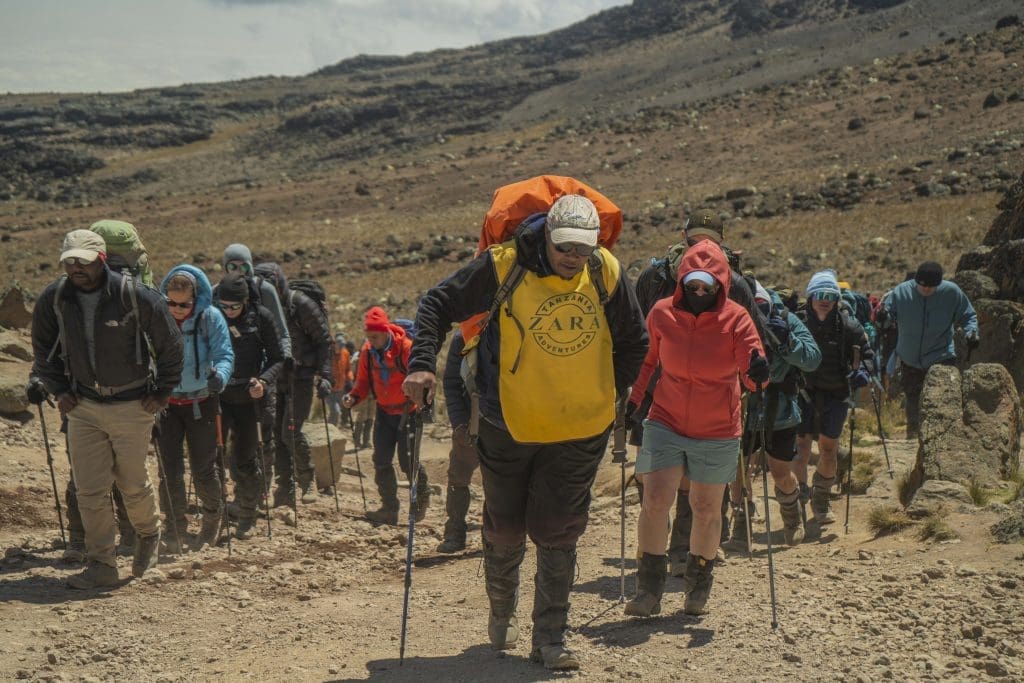
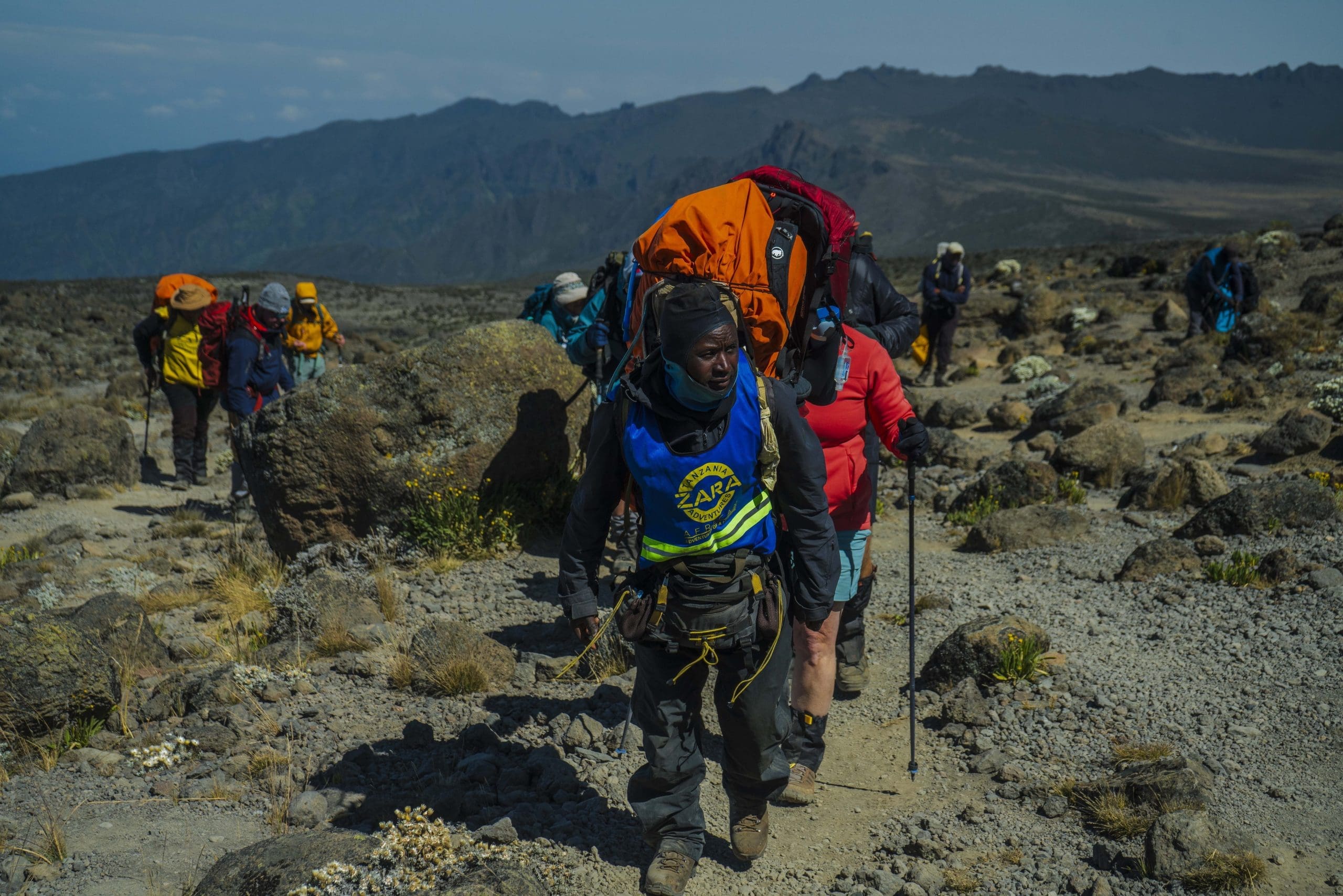
Reaching the Mount Kilimanjaro summit isn’t a solo achievement. It’s a team effort made possible by experienced guides and porters. Their role becomes even more critical during the night.
Guides Lead the Way
Licensed Kilimanjaro guides are trained in mountain safety and altitude management. On the night, they monitor your pace, check for signs of altitude sickness, and offer crucial encouragement. Their deep knowledge of the mountain terrain, especially in the dark, is what helps many climbers reach the summit.
Porters Make It Possible
Although porters usually stay at lower camps, their early work setting up tents, carrying supplies, and preparing meals ensures that you’re well-rested and fueled for the night. Some porters may also accompany the group partway up for extra support.
A Lifeline at High Altitude
Summit night can be disorienting. Low oxygen levels, fatigue, and cold can impair your judgment. Guides often carry oxygen, pulse oximeters, and first aid kits, offering relief and protection in emergencies.
Without this incredible support team, most climbers would not be able to reach the summit of Uhuru Peak.
Final Thoughts
Standing atop the highest mountain in Africa is more than just a climb. It’s a moment of deep personal achievement. Whether you climb to celebrate a birthday, tick off a bucket list goal, or raise money for charity, reaching Uhuru Peak offers a life-changing experience. With the right gear, a positive mindset, and a reputable guide company, almost anyone can stand atop Africa’s tallest peak and watch the clouds roll beneath them.
FAQs
1. How long does it take to reach the summit of Mount Kilimanjaro?
It typically takes 5 to 9 days, depending on the route you choose. Longer routes like Lemosho and Northern Circuit offer better acclimatization and increase your chances of reaching the summit of Kilimanjaro safely and successfully.
2. Can a beginner climb to the Mount Kilimanjaro summit?
Yes, with proper preparation, even first-time hikers can. You don’t need technical climbing skills, but a good level of fitness, mental endurance, and proper acclimatization is key to a safe and successful climb.
3. What’s the best time of year to summit Mount Kilimanjaro?
The best times are during the dry seasons, specifically from January to early March and from June to October. These months offer the clearest skies and safest trail conditions for your summit attempt.
4. Do I need a guide to climb Mount Kilimanjaro?
Yes. Tanzanian law requires all climbers to be accompanied by a licensed guide. Going with a trusted company ensures your safety, comfort, and support throughout the trek.