


The Barranco Wall is a steep ridge on the south side of Mount Kilimanjaro. The wall was formed approximately 200,000 years ago, following volcanic activity and landslides.
The term “Barranco” is a Spanish word for a deep ravine or gorge, a narrow, deep valley. Climbing the wall is an exciting challenge for climbers who love an adventure. Climbers will trek and scramble, using their arms and knees on various points along the wall.
How Tall is The Barranco Wall?
Barranco Wall is only 257 meters (843 feet) tall above the Barranco Valley. The wall sits above the Great Barranco Valley, which is 3,976 meters (13,044 feet) high. The summit of the Barranco Wall from the base measures 4233 meters (13,887 feet). Although it may look daunting from a distance, the path leading to the top of the wall is well-travelled.
How Do I Get To The Barranco Wall On Mount Kilimanjaro?
The Barranco Wall is located on the southern part of Mount Kilimanjaro. The four specific routes that travel this direction are:
- Machame Route
- Lemosho Route
- Shira Route
- Umbwe Route
Machame Route
This route, also known as the whiskey route, is considered the most scenic. Starting at the Machame gate, located at an elevation of 1,800 meters (5,905 feet), the route passes through a unique landscape. If you approach from the south, you get to the wall on day 4. Not only does it have beautiful scenery, but it is also more challenging than the other routes. The Machame route is the most popular route for climbing Mount Kilimanjaro. Many climbers take this route, making the trail and campsites very busy.
Lemosho Route
The Lemosho Route is another scenic trail on Kilimanjaro. It is a newly found trail that joins the Machame route at a point. Starting at the western flanks, it traverses a remote rainforest and the spectacular Shira Plateau. The first two days are peaceful, with less traffic, until they join the Machame trail. Hikers get to see wildlife along the way, from colourful birds to blue and white monkeys. They then get to the Barranco Wall on Day 4.
Shira Route
Similar to the Lemosho route, the Shira Route approaches the mountain from the west. It also crosses the Shira Plateau at an elevation of 3,850 meters (12,631 feet). However, hikers begin their journey from the Shira Gate, bypassing the remote rainforest. It is not a common pathway, as acclimatisation is more difficult here than in other routes. This route eventually merges with the Lemosho and Machame trails, and its climb up the Barranco Wall is also on Day 4.
Umbwe Route
The Umbwe Route offers a challenging climb to Kilimanjaro. It is the shortest and steepest route with the lowest summit success rate. The ascent begins on the south side via a steep, narrow ridge. Although it does not require technical tools, trekkers will need to manoeuvre over tree roots and rocks. Climbers reach the Barranco Wall on day 2 or 3.
How Do You Get To The Barranco Camp On Mount Kilimanjaro?
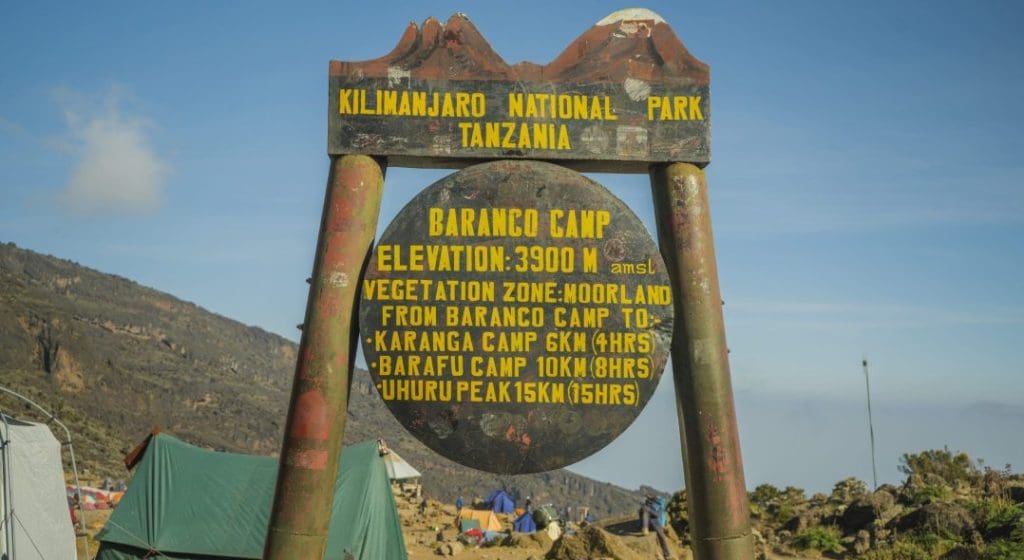
First, you must know how to reach Barranco Camp. Climbers can take any of the four routes —Machame, Lemosho, Shira, or Umbwe—to the Barranco camp. It follows a ‘climb high, sleep low’ principle, as climbers will first ascend to the Lava Tower at 4,630 meters (15,190 feet). The Lava Tower is a 91-meter (300-foot) tall rock formation, notable for its rugged and tower-like appearance. At the Lava Tower, climbers can stop for rest or lunch. A steep descent into the great Barranco Camp then follows it. After reaching the top of the wall, the trail takes climbers to the Karanga Valley. Firstly, you must know how to get to Kilimanjaro before beginning the journey to the Barranco camp.
Can I Avoid The Barranco Wall?
Yes. There are other routes for climbers to reach Kilimanjaro’s peak that do not pass through Barranco Wall. These are the Marangu, Northern Circuit, and the Rongai Route.
- The Marangu route approaches Kilimanjaro from the southeast, a different flank from the southern path of Barranco.
- The Rongai Route offers a climb with less foot traffic from the northern side of Kilimanjaro. It approaches from the north and therefore cannot intersect the southern trails that lead to Barranco Camp.
- The Northern Circuit Route is a new and exciting route to Kilimanjaro. It begins like the Lemosho Route on the western side but veers north after the Shira Plateau. It bypasses Kilimanjaro Barranco Wall entirely, rejoining the other routes at Kibo Hut.
How Difficult Is Barranco Wall?

Climbing Barranco Wall isn’t as tricky as it looks. It is a non-technical challenge that does not require any specialised gear, trekking poles, or expert climbing skills. All that is needed is a slow, steady, and focused climb with your hands and feet. Some call it the breakfast wall because it is an early morning challenge immediately after breakfast.
How Many People Climb The Barranco Wall Yearly?
Approximately 50,000 people attempt to summit Mount Kilimanjaro each year. Among this number, a few thousand dare to go through the barranco wall—though there are no precise records of how many. Despite its dramatic appearance, the Barranco Wall is considered a safe structure. Although Kilimanjaro records about 5 to 10 climber deaths every year, none have been associated with the Barranco Wall.
When Is The Best Time To Climb Barranco Wall?
There are two dry periods suitable for visiting. The first is from late December to early March, which is warmer and with fewer trekkers. June to October marks the second dry season, characterised by a cooler and drier atmosphere. This period is more visible compared to cloudy mornings experienced early in the year. Additionally, there are more trekkers and a high energy level from the thousands of hikers who visit during this period. With patience, balance, and a steady pace, climbing the Barranco Wall is fun and relatively safe.
How Long Does It Take to Climb Barranco Wall?
Climbing the Kissing Rock takes about 1-2 hours to climb. The 257-meter-tall rock-shaped staircase has a thin passage. This means climbers have to follow slowly as they wait for people to move.
What Is The Kissing Wall or Hugging Wall on Barranco Wall?
The kissing wall, also known as the hugging wall, is a narrow section of the Barranco Wall that requires hikers to be very close to the wall. Some climbers do kiss the wall as they move forward, simply for the fun of it or to capture a great photo moment.
What Can Climbers See From The Barranco Wall?
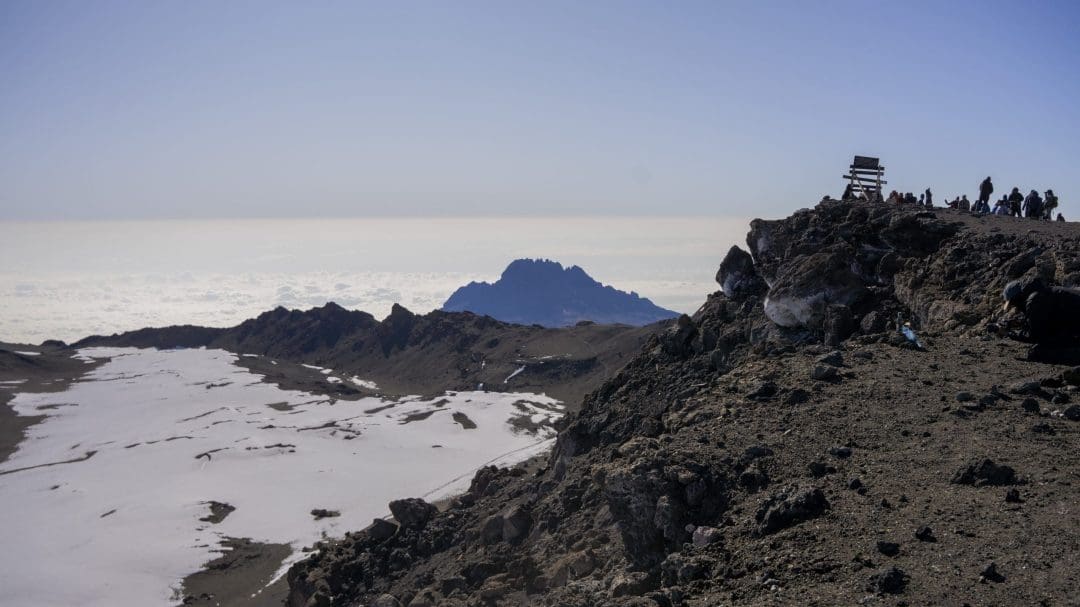
The view from the Barranco wall is spectacular. It is an excellent reward for the strenuous walk up the wall. Beyond the challenge, a 360-degree view of the towering Kilimanjaro is visible. You also have a clear view of the scenic Barranco Valley, rugged terrain, and other lush valleys below.
Tips For Climbing The Barranco Wall On Kilimanjaro

Before you book your trip to the Barranco Wall, here are a few things to get prepared for the great climb.
- Choose an experienced climbing guide with a strong safety record. These professionals have scaled the Barranco Wall numerous times and are familiar with the best routes for a smooth ascent. Follow their advice at every point from your bookings to your final climb.
- Maintain a calm and positive mindset. Climbing Kilimanjaro through the Barranco Wall seems difficult from a distance, but it’s well within reach. Many climbers have successfully scaled through, and you can too!
- Get ready to use your hands and feet to scramble up the wall. The Barranco Wall is a low-grade scramble that requires no specialised climbing equipment. Pack up gloves and knee guards for extra protection.
- Don’t be in a hurry to climb. Move slowly and steadily. If you rush, you may exhaust yourself and turn back before you reach your goal.
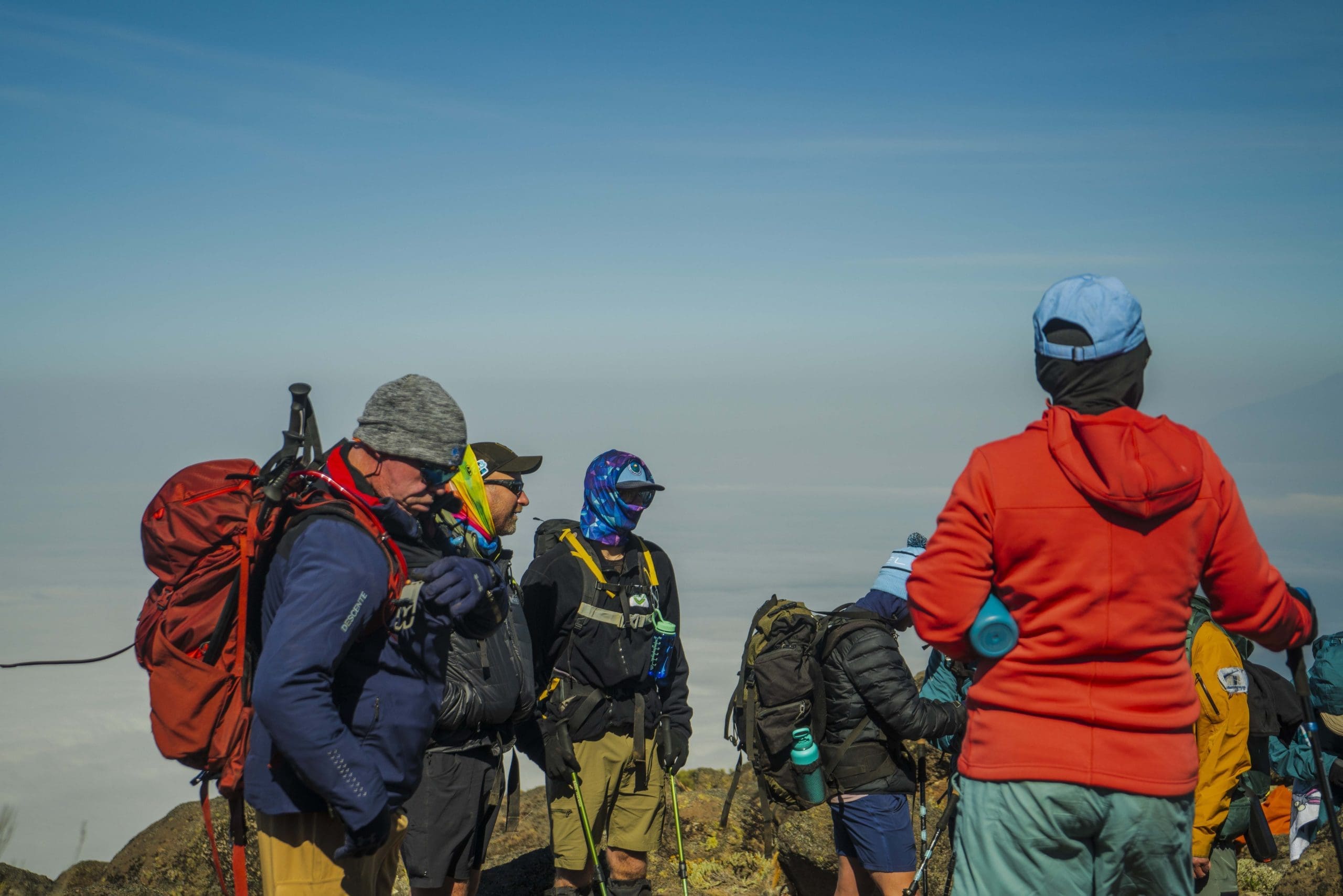
- If you book your trip during busy seasons, expect some crowding along the route. Specific narrow paths may require short waits as other teams move ahead. Be patient for your turn and use these moments to catch your breath and take in the incredible views around you.
- Don’t forget to take photos of yourself and your team during the climb and at the top of the wall to celebrate your success.