

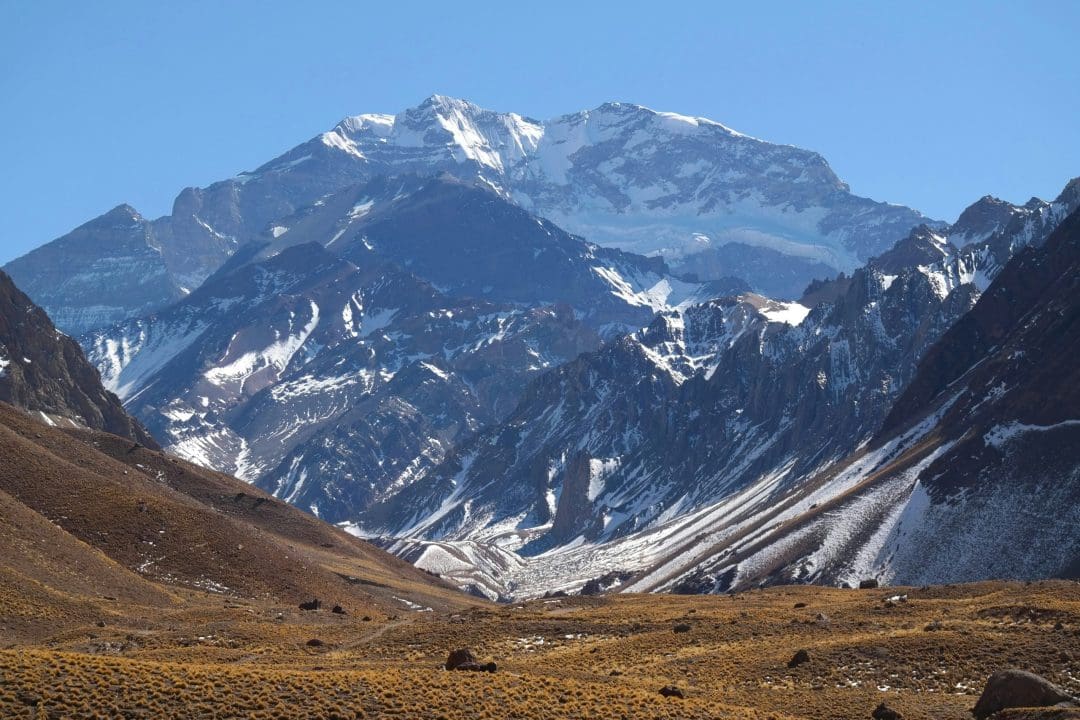
Cerro Aconcagua, with a height of 6,961 metres (22,838 ft), is the tallest mountain in South America. It is located in Argentina, near the border with Chile.
Aconcagua Mountain is one of the seven summits, second in height after Everest, and part of the Andes Mountains Chain. The origin of the name is unknown, but several speculations suggest it is derived from the native language of Quechua.
Aconcagua is the highest trekking peak in the world and a popular destination. It has a regular route, making it a non-technical climb. Hence, if you are a hiker who wants an easy camping experience, Aconcagua can be another perfect choice after the popular Kilimanjaro.
How Was Aconcagua Formed?
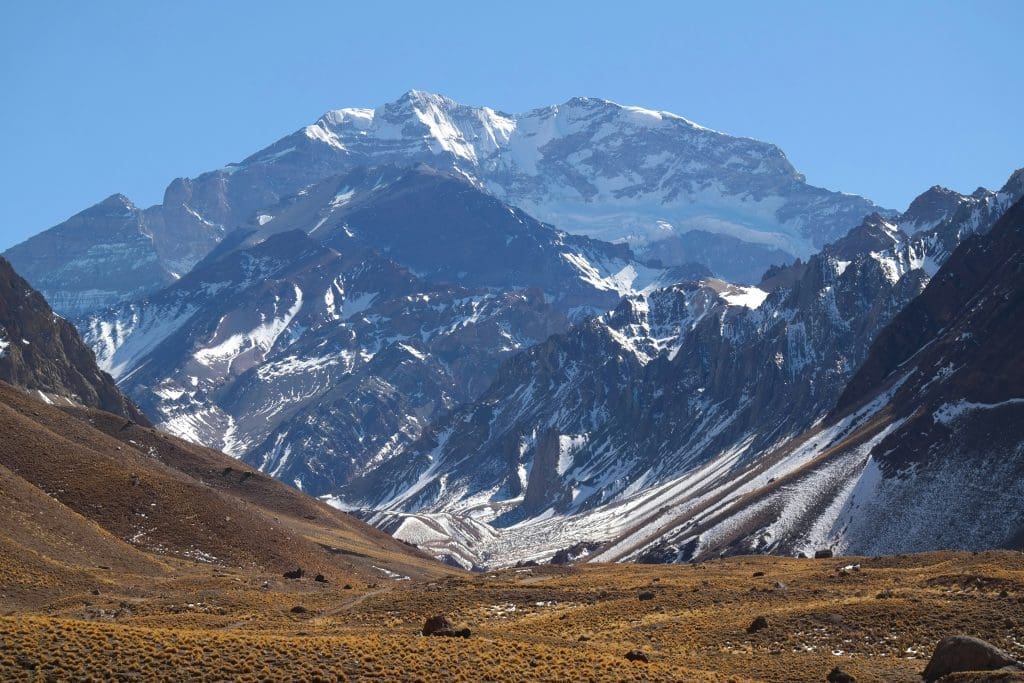
The highest peak in South America was not formed by a volcanic eruption, unlike many others. It was formed as part of the Andes through tectonic uplift. Underneath the South American Plate is the Nazca Plate, which has been pushing the Andes up for many years. It has a folded shape that consists of metamorphic and sedimentary rock types.
Aconcagua is located in the Mendoza Province, within the Aconcagua Provincial Park. It dominates the Andes in Argentina.
How Many Routes Are On Aconcagua?
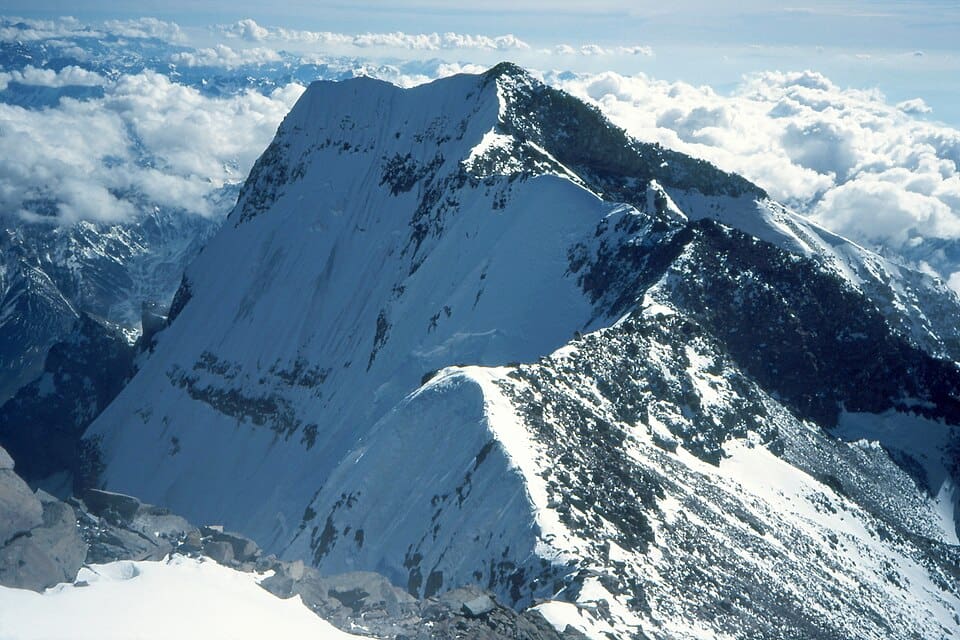
There are four different routes to summit the tallest mountain in South America. Two of these routes are the most popular. Below is the list:
1. Normal Route
The Normal route is the most popular way to summit. Although the mountain has other routes, this is the most accessible and less technical one, with no rope work required. Over 70% of climbers use it. It starts from the Horcones Valley, then to the Plaza de Mulas base camp. After three high camps, reaching the summit involves a steep slope and then the peak.
2. Polish Glacier Route
The Polish glacier has beautiful scenery. The downside to it is the technical aspect of climbing. It requires ice axes, ropes, and protective gear. All these challenges make the route less frequented. Only about 10% of climbers use this route, and oftentimes, they are experienced climbers.
3. South Face Route
The South Face route presents its own set of challenges, including steep sections and high technicality required for climbing. Some experienced climbers use this route because it offers a vivid view of the rare southern face of Aconcagua. Its view is beautiful, offering different and unique perspectives of the Andes. Approximately 5% of climbers use this route due to their advanced technical climbing skills.
4. Vacas Valley Route/Polish Transverse Route
This route begins in the Vacas Valley, located on the east side of Aconcagua. It is a longer journey, offering a serene and solitary hiking experience. The major scenes during the trip are the high-altitude landscapes and valleys. Some climbers enjoy this route due to its lower crowds, with about 10% of hikers using it.
How Is The Climate On Aconcagua?
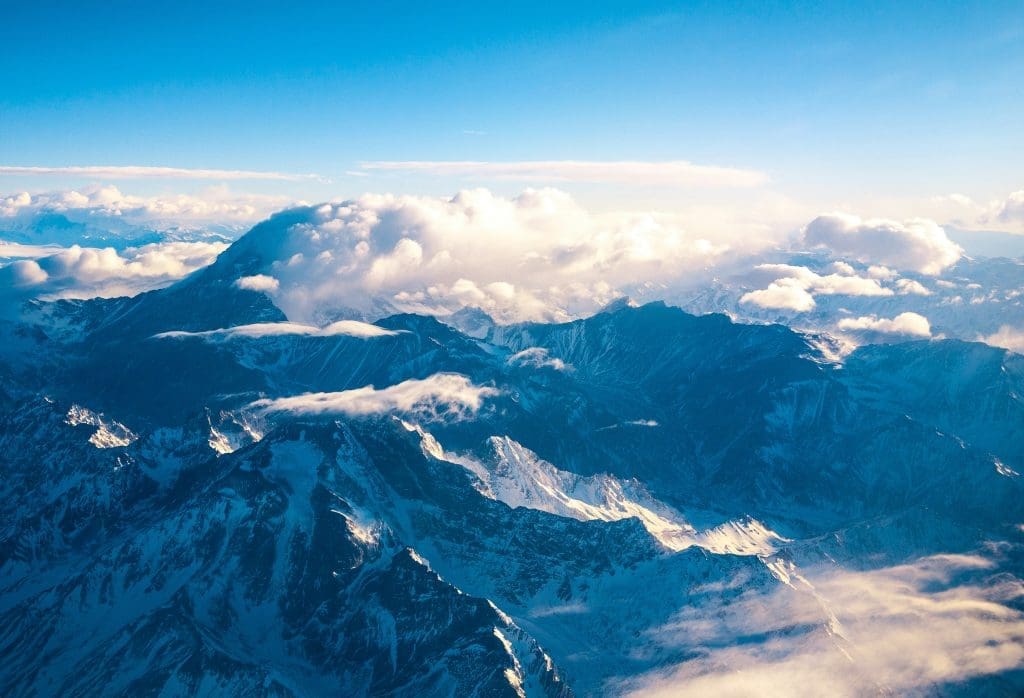
Aconcagua is part of the Andes Mountains Chain. Hence, the climate is similar and varies with altitude. Factors such as rainfall, wind, and proximity to the sea influence the varying climatic conditions. For example, the west side of the Peruvian Cordillera Occidental experiences little rain. The east side, in contrast, experiences heavy rainfall.
As expected, temperature varies with altitude. The temperature at altitudes below 2,499 meters (8,200 feet) is hot during the day and warm at night. The zone between 8,200 and 11,500 feet (3505 meters) is the most conducive area on the mountain because the temperatures are mild and tolerable. Here is the summary of Aconcagua’s climatic conditions due to its zones:
Zone | Height | Climatic Condition |
Base | Below 10,000 feet (3048 meters) |
|
Mid mountain | 10,000 to 18,000 feet (3048 to 5486 meters) |
|
High Mountain | Above 18,000 feet (5486 meters) |
|
When Is The Best Time Of The Year To Climb Aconcagua?
The best time to climb Aconcagua Mountain is during the summer, from December to February. Summer has the most conducive weather for climbing. During this period, there are fewer storms and incidences of extreme temperatures.
The temperatures in summer can range from 20°C (68°F) during the day to -15°C (5°F) at night at higher elevations. It is safer and more comfortable to climb during the summer in these weather conditions, especially for a first-time climber.
Although altitude sickness can be a limiting factor, proper acclimation and gradual ascent are crucial for successfully summiting the mountain. Understanding weather conditions is also essential because they can change rapidly without warning.
Additionally, the summer period typically experiences a lower number of people compared to other seasons of the year. This period allows the climber to climb during the day, allowing them to go farther before nighttime.
Statistics indicate that out of over 4,000 yearly climbers of Aconcagua, attempts during the summer have the highest success rates.
Sometimes, during months with severe winds, access routes may be closed to prevent fatalities. Hence, climbing during the summer helps preserve the mountain by reducing the impact of crowds of climbers. This approach also promotes ecological biodiversity in the surrounding areas of the hill.
Kilimanjaro vs Aconcagua: Which Mountain Is Harder to Climb?

Aconcagua is harder than Kilimanjaro. Both mountains are part of the Seven Summits, but they present their unique risks and challenges. Here is how:
Height
First of all, Aconcagua (22,838 feet) is higher than Kilimanjaro (5,895 meters). The higher a mountain is, the greater the risks and dangers. Aconcagua takes longer to summit than Kilimanjaro, with a three-week difference, due to its significantly higher elevation. With extended exposure at altitudes above 16,000 feet, Aconcagua becomes even more challenging.
Weather
Secondly, Aconcagua’s extreme weather conditions make it more technically challenging to climb than Kilimanjaro. Although Kilimanjaro has its own challenges, Aconcagua is more physically demanding. Aconcagua is colder and has more serious winds and storms. Also, the temperatures are usually below zero.
Climbing Gear
Climbing Aconcagua requires more preparation. For anyone climbing Kilimanjaro, a backpack of supplies can be sufficient for the entire experience. On Aconcagua, climbers carry their gear to the base camps using mules. Then, they have bags of about 18 to 23kg to other camps and to the peak of the mountain.
In-Closing
Climbing towering mountains can be scary, especially for beginners. Aconcagua is the tallest among the highest peaks in South America and the undisputed highest in the Western Hemisphere. Although the height can be intimidating, with proper preparation, a suitable route, and a guide, summiting it is relatively easy.
Frequently Asked Questions about mt. Aconcagua
1. What Is The Success Rate On Aconcagua?
The success rate is between 30% to 40%. Although these figures vary yearly. Failure in reaching the peak is due to unbearable weather conditions and altitude sickness. Experienced climbers and those who are adequately prepared acclimate quickly, thereby increasing their chances of success.
2. Do Animals Live On Aconcagua?
Animals live on Aconcagua. Animals like foxes, hares, and guanacos live close to the mountain’s base. Smaller ones, such as birds and insects, live below due to the dry and cold climate.
3. Can You Climb Aconcagua Without A Guide?
You can climb Aconcagua without a guide. With the proper preparation, kits, and skills, you can independently summit the mountain. Although you may not need a guide to obtain permits, climbing it with an understanding of the challenges is essential.