

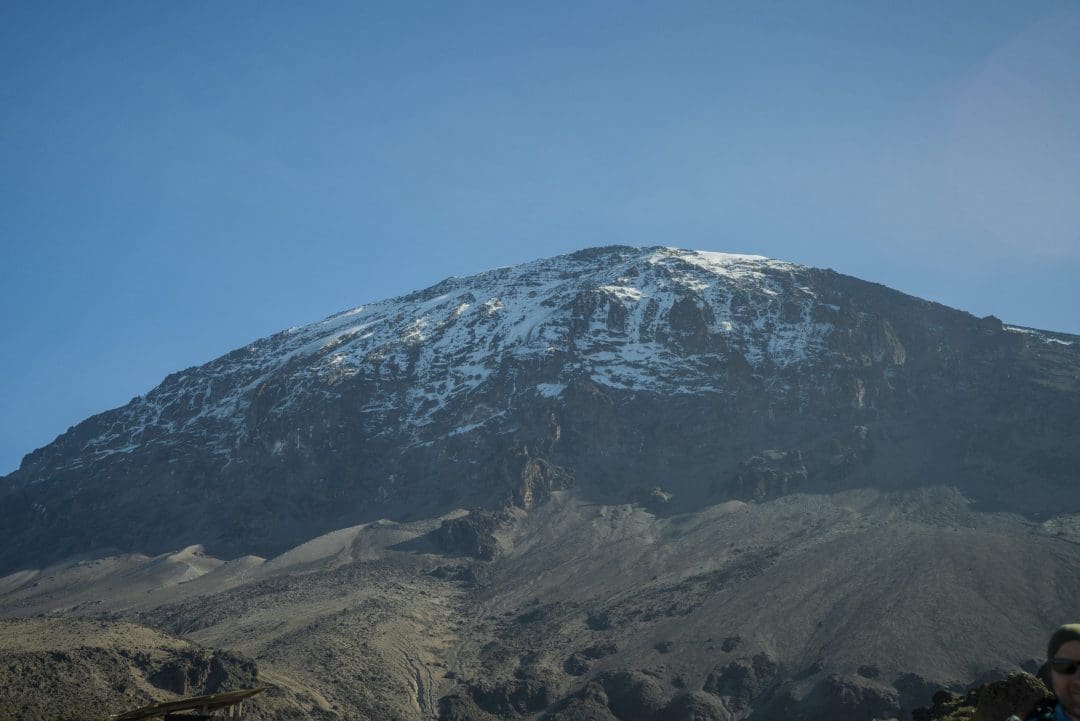
Have you ever wondered how the Kilimanjaro volcano formed, standing alone with no surrounding mountain range? Rising to 5,895 meters (19,341 feet) above sea level, Kilimanjaro is the tallest mountain in Africa.
Also, beyond the famous summit lies a volcanic story that most visitors overlook.
How Was Mount Kilimanjaro Formed?
Mount Kilimanjaro was formed as a result of tectonic activity. Whenever tectonic activity occurs, the Earth’s crust slowly pulls apart. This is because some tectonic plates meet to form new plates, and older plates tear apart to create rifts.
As the African tectonic plate began to pull away millions of years ago, lava from deep within the Earth rose through the weak crust. This lava erupted onto the surface, pushing rock and sediments upwards. Over time, repeated eruptions built the massive volcanic structure that is Mount Kilimanjaro today.
Is Kilimanjaro A Volcano?
Many people ask, ‘Is Kilimanjaro a volcano?‘ and the answer is yes! Mount Kilimanjaro is the world’s largest free-standing volcanic mountain, with three central volcanic cones: Shira, Mawenzi, and Kibo.
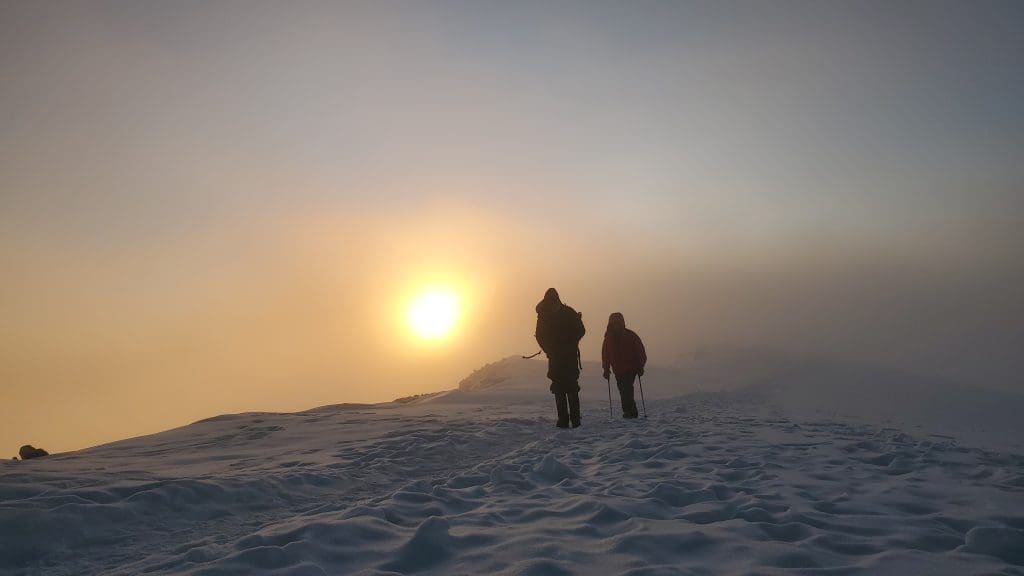
The first volcanic cone was formed 2 million years ago. Thousands of years later, the second cone, Mawenzi, formed similarly. About 40,000 years later, Kibo, the youngest cone, was formed. If you are climbing Mount Kilimanjaro today, you will hike to the highest point, known as Uhuru Peak, on Kibo.
Today, Mawenzi and Shira are extinct and have collapsed into a broad plateau. The Shira plateau has an average elevation of 3,962 metres (13,000 feet), while Mawenzi, the second-highest cone, reaches 5,149 metres (16,893 feet).
What Type Of Volcano Is Kilimanjaro?
Kilimanjaro is a stratovolcano. A stratovolcano is a large, steep-sided volcano that forms over time from repeated layers of lava, ash, and volcanic debris. Firstly, thick lava accumulates within the volcano. Then, gases become trapped beneath the surface. This pressure increases until it is released through explosive eruptions. It adds new layers and gradually builds the volcano’s tall structure. Mount Fuji of Japan and Mt. Agua in Guatemala are two other popular stratovolcanoes.
Is Kilimanjaro Still An Active Volcano?
Kilimanjaro is a dormant volcano unlikely to erupt anytime soon. Although it has a potential for volcanic activity, it has not erupted since 360,000 years ago. About 200 years ago, Kilimanjaro recorded volcanic activity, including fumarole activity. The fumaroles near the summit continue to emit steam and gases, including sulfur dioxide and carbon dioxide. However, if you’re visiting, there’s no need to worry about an eruption.
What Is A Free Standing Mountain?
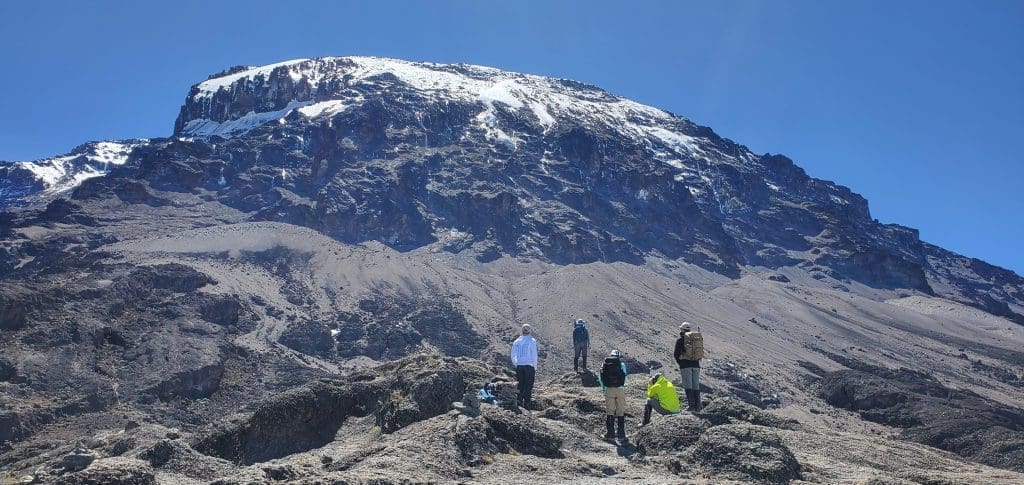
A free-standing mountain is a mountain that stands alone rather than being part of a long mountain range. It is not connected to nearby peaks by ridges or chains. This differs from most high mountains, such as the Himalayan Range.
Mount Kilimanjaro’s summit is the tallest free-standing mountain, rising independently from the plains of Tanzania without belonging to a larger mountain system.
Is Kilimanjaro A Supervolcano?
Mount Kilimanjaro is not a supervolcano. A supervolcano can produce massive eruptions. They have a high volcanic explosivity index capable of affecting the global climate. Kilimanjaro Volcano has never produced eruptions of this scale.
What Is The Geology of Mount Kilimanjaro?
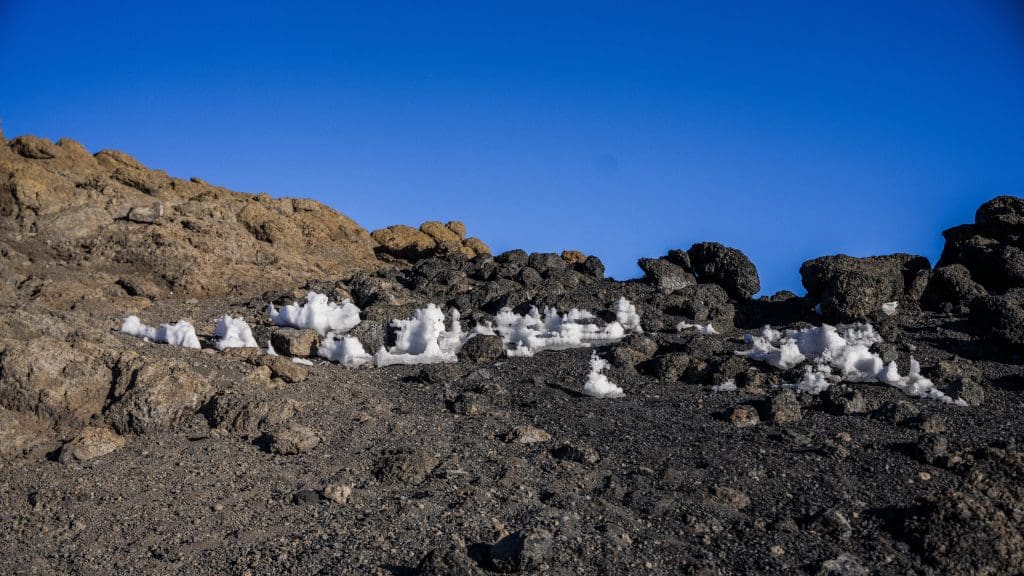
Kilimanjaro is composed of lava, ash, and rock, with large amounts of andesite. Andesite is a grey or blue-grey volcanic rock composed of 52-63% silica.
Also, the mountain is composed of basalt, a rock that forms lava when heated. It has a high concentration of iron and magnesium and a low silica content. Basalt has a dark grey colour, which is why Kilimanjaro stands out with a striking contrast against its glacial white cap.
On the slopes of Kibo volcano, you will find an impressive amount of obsidian. Obsidian is a unique igneous rock that forms when molten lava cools too quickly for a crystalline structure. As a result, the surface is smooth and appears dark glass-like, but it can range from brown to green, yellow, or red.
What Are The Popular Climbing Routes To Climb Kilimanjaro?
The most commonly trekked routes on Mount Kilimanjaro are Marangu, Machame, and Lemosho. They are the most accessible and have the highest success rates.
Marangu Route
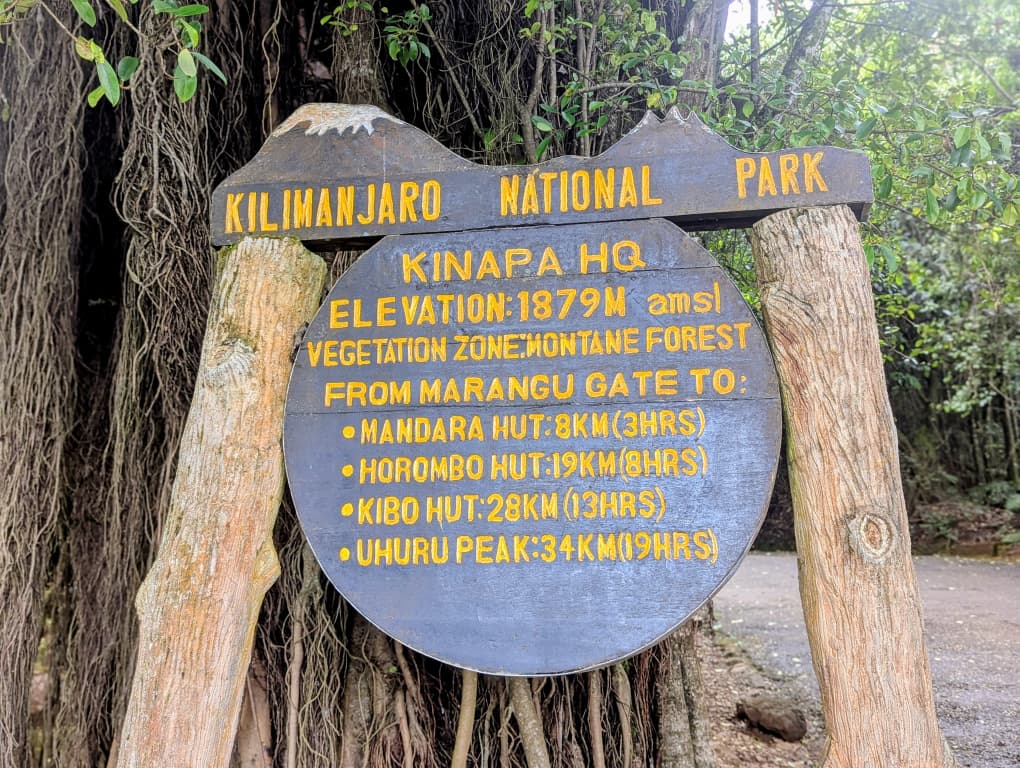

This route is considered the easiest in terms of travel and infrastructure. The Marangu Route approaches the peak from the southeast. If you are a first-time climber, consider taking this route. It uses the same path for both ascent and descent, allowing less time for acclimatization. You can sleep in hut accommodation instead of camp tents.
Machame Route
The Machame route is more physically demanding. Approaching from the southwest side, you climb through steeper rock sections. However, it has a better summit success rate due to the gradual ascent. Also, if you wish to enjoy stunning scenery, this route offers a beautiful hike through the rainforest and alpine desert.
Lemosho Route
This is the third most popular climbing route to Kilimanjaro. It starts on the western side of the mountain, which is a longer drive compared to other routes. Our Kilimanjaro guide may suggest this route to you because of its easy acclimatization and spectacular views.
While Marangu, Machame, and Lemosho are the most commonly used routes, Mount Kilimanjaro offers four other established routes. To learn more, read our complete guide to Mount Kilimanjaro routes and which one best suits you.
What Does The Great Rift Valley Have To Do With Kilimanjaro Volcano?
The Great Rift Valley, also known as the East African Rift System, is a vast geological feature that stretches from the Middle East through eastern Africa to southern Africa. The rift passes through several countries, including Ethiopia, Kenya, and Tanzania.
Mount Kilimanjaro sits right at the eastern end of the East African Rift System.
Geologically, the Great Rift Valley is created by tectonic plate movement. The movement includes the Nubian, Somali, and Arabian plates. While the Somali Plate is gradually moving away from the Nubian Plate to the east, the Arabian Plate is moving to the north. As these plates pull away from each other, the region between them thins to form a great rift.
These rifts caused sections of land to sink. Other landforms rise, forming deep valleys and a chain of lakes and volcanoes. Although the mountain does not lie directly within the central rift valley, it exists today because of the tectonic plates that shaped the Great Rift Valley.
Does Kilimanjaro Have Snow?
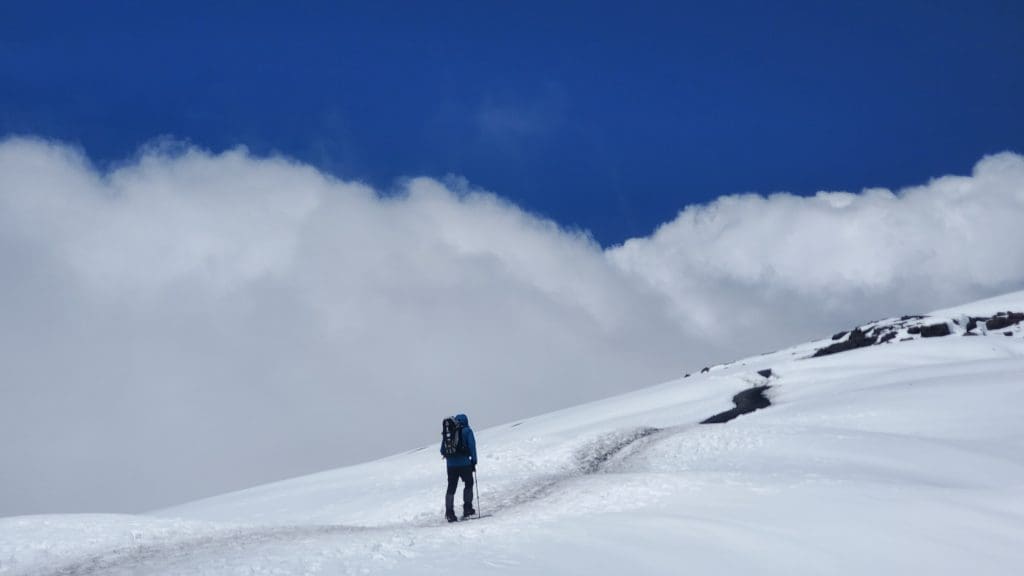
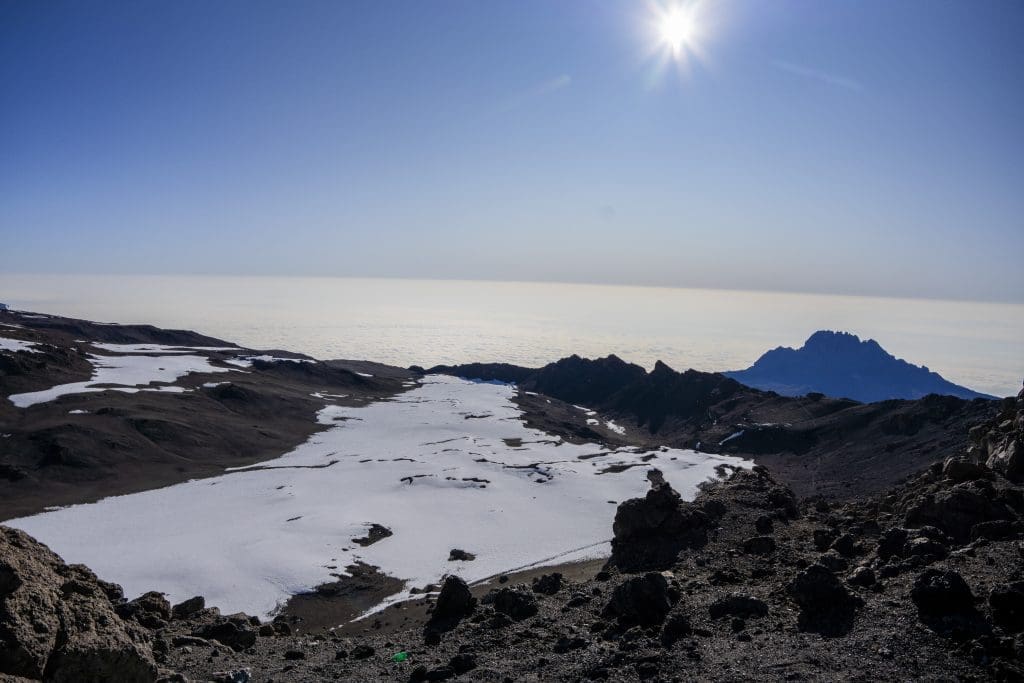
Snow and ice form near Uhuru Peak, where temperatures remain below freezing year-round. Snow is formed by a unique process called the exhaust. In this process, warm air rises from Kilimanjaro’s lower slopes and cools as it moves upward. As temperatures drop, the moisture in the air condenses and eventually freezes, forming snow near the summit.
A natural balance between snowfall and melting influences the amount of snow on Kilimanjaro. During wetter periods, you can expect precipitation to add to the mountain’s snow cover. In the warmer months, high temperatures melt much of this snow.
How Is Climate Change Affecting Mount Kilimanjaro?
One of the major attractions of Kilimanjaro volcano is the glaciers located at the equator. However, global warming is causing Kilimanjaro’s snow to evaporate directly into vapour. It is estimated that the mountain’s snow caps have declined by more than 80% since 1912. The impact is that tourism may decline if Kilimanjaro’s glaciers disappear completely. Additionally, local farmers are losing seasonal meltwater from the icy rivers for agricultural and livestock production.
What Volcano Is Most Likely To Erupt In 2025?
In November 2025, Hayli Gubbi, part of the Erta Ale volcano range in the northern Afar Region of Ethiopia, experienced an unexpected eruption. It was its first eruption in 12,000 years. Nyamulagira, in DR Congo, is an active volcano that has erupted more than 40 times since the late 19th century. It showed signs of lava flows in early 2025. Other predictions say that Axial Seamount, an underwater volcano off the coast of Oregon, Mount Etna in Italy, and Mount Lewotobi Laki-laki in Indonesia are due for eruptions in 2025
Why Is Mount Kilimanjaro So Famous?
Mount Kilimanjaro is famous as the Roof of Africa, the tallest mountain on the African continent. It is also the world’s tallest free-standing mountain with a snow-capped summit just three degrees south of the equator. Every climber experiences up to five distinct climate zones in a single expedition, thanks to its unique climate.