




The number one Tour Operator in Tanzania
The number one Tour Operator in Tanzania
Climbing Mount Kilimanjaro hits you in a way most hikes don’t because you are ascending the highest mountain in Africa.
Towering at a height of 5,895 meters (19,341 feet) and located in northern Tanzania near Kenya. The journey takes climbers through different climate zones and altitude changes from the warm tropical base to the icy summit.
Along the way, you will encounter lush rainforests, open alpine deserts, and snowy peaks, each with its own distinct climate and landscape.
This guide outlines the major Kilimanjaro climate zones, the items you need for the climb, and the weather conditions for each stage.
Mount Kilimanjaro has five main vegetation zones, shaped by altitude, temperature, rainfall, and sunlight exposure, namely;
As you ascend the mountain, the temperature and air pressure steadily drop, and the landscapes start to shift gradually. Most of the time, you don’t even notice it happening until you look around and realise you’re in a completely different environment.
Because each ecological zone of Mount Kilimanjaro is unique, it creates small pockets of weather, giving each side of the mountain a slightly different character, even though it sits so close to the equator.
At the base of Mount Kilimanjaro, the land is full of farms and villages where people and nature meet before the climb begins. This area, known as the Cultivated Zone or Bushland Zone, extends from 800 to 1,800 meters (2,600–6,000 feet) and receives abundant rainfall.
The soil is rich and fertile, perfect for growing yams, bananas, potatoes, maize, coffee, and other crops. While the Daytime is warm, the temperature at night is mild, and livestock graze freely on the lower slopes.
The Chagga people, Tanzania’s third-largest ethnic group, live in villages across this zone and carefully tend to the land with their agricultural skills.
This zone offers hikers a gentle introduction to the mountain, featuring scenic farmland, forest trails, and a glimpse into life across Kilimanjaro’s climate zones, including the popular Materuni Falls.
The Rainforest Zone, which marks the start of the Kilimanjaro National Park, begins at about 1,800 meters (6,000 feet) and continues to 2,800 meters (9,000 feet). Most of the mountain’s water comes from this forest, and the vegetation is thickest on the southern side.
The forest is full of orchids, ferns, palms, sycamore figs, and tall camphorwood trees growing across the slopes, while the east, west, and northern slopes have lighter, more pine-like trees, giving this Kilimanjaro vegetation zone its deep green look.
Many animals inhabit this zone, even though the dense vegetation makes them hard to spot. The colobus and blue monkeys move through the trees, while the honey badgers, bushpigs, and forest antelopes stay closer to the ground.
The rainforest is warm and humid during the day and cooler at night, particularly when it rains; therefore, climbers are advised to carry rain jackets.
This zone provides a strong first impression of Kilimanjaro’s natural character, with dense greenery and a mix of plants and wildlife, before the landscape begins to change at higher elevations.
As you travel beyond 2,750 meters (9,000 feet) to 4,000 meters (13,000 feet), the rainforest fades because the air gets drier and cooler. Daytime temperatures are pretty hot, but at night they frequently drop to 32°F, 0°F, or even lower.
The slopes of this climb zone are covered in enormous heather plants, some of which are over thirty feet tall. In between, marshy regions of the Shira Plateau gather water from the higher slopes, and spots of wildflowers thrive among volcanic rocks and boulders.
This zone is also home to special high-altitude plants such as giant lobelias and groundsel, which store water in their thick stems and close their leaves at night to survive the cold.
Spending a day or two here helps your body acclimate while allowing you to take in the quiet beauty and distinctive charm of this semi-alpine landscape. Hikers also get to see amazing views of the surrounding landscape, including Mount Pare, the nearby Meru volcano, and Mount Kenya.
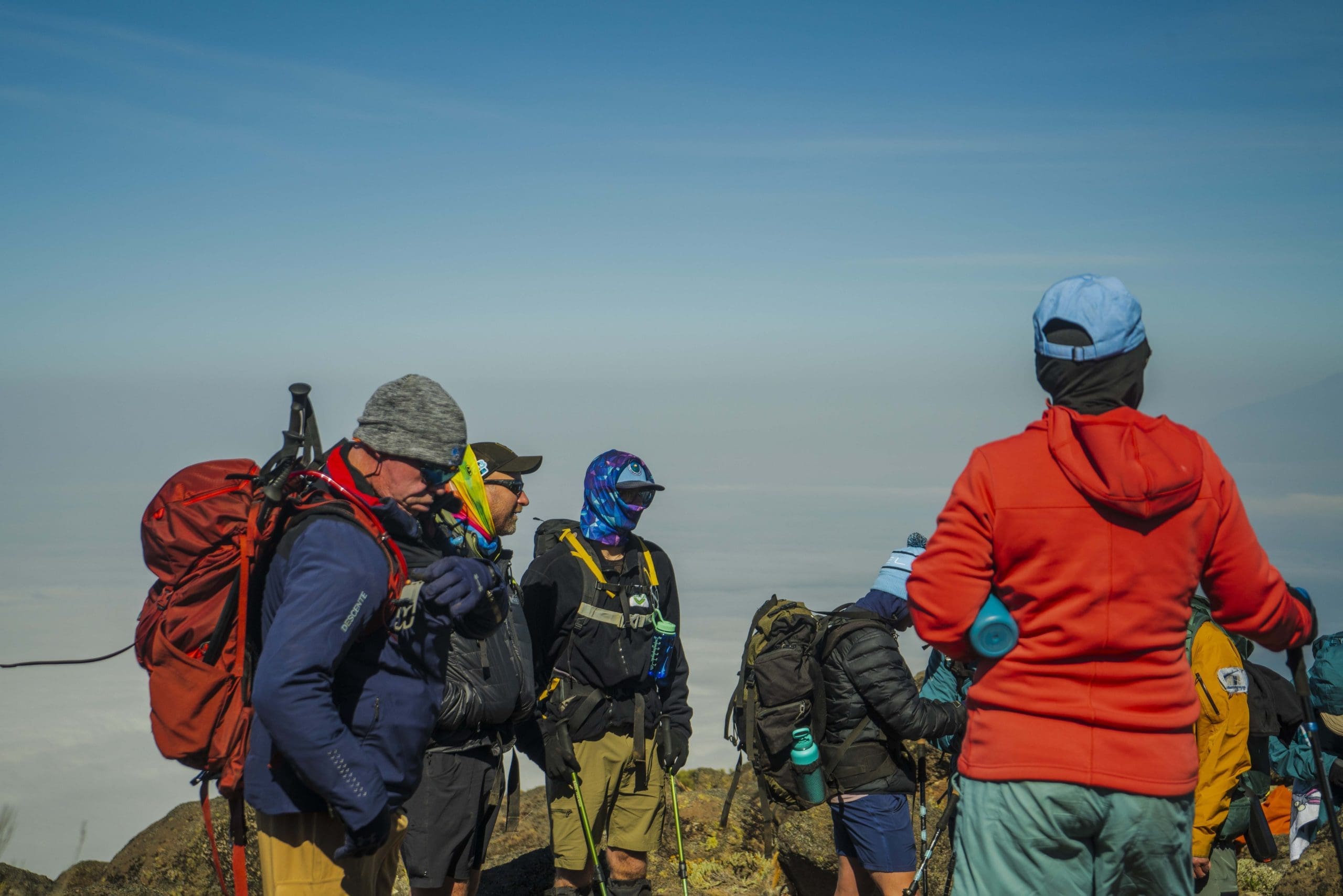
At 4,000 meters (13,000 feet), the Alpine or Highland Desert Zone is characterised by dry volcanic rocks, high winds, and little water, owing to arid air and damp soil, which make it difficult for plants and animals to survive.
Rainfall in this Kilimanjaro vegetation zone is low, leading to a rapid drop in temperature. The thin air near the equator makes the sunlight intense during the day and the nights cold.
Because there are few animals in this area, scientists study insects, which are better adapted to local conditions than larger animals. Some birds, including giant hawks and ravens, just fly over the area; they don’t live there.
Climbers need time in this zone to help their bodies adjust to the higher altitude, and most routes in this zone follow the “climb high, sleep low” method, which reduces the risk of altitude sickness (acute mountain sickness) and supports safer acclimatisation before moving toward the summit.
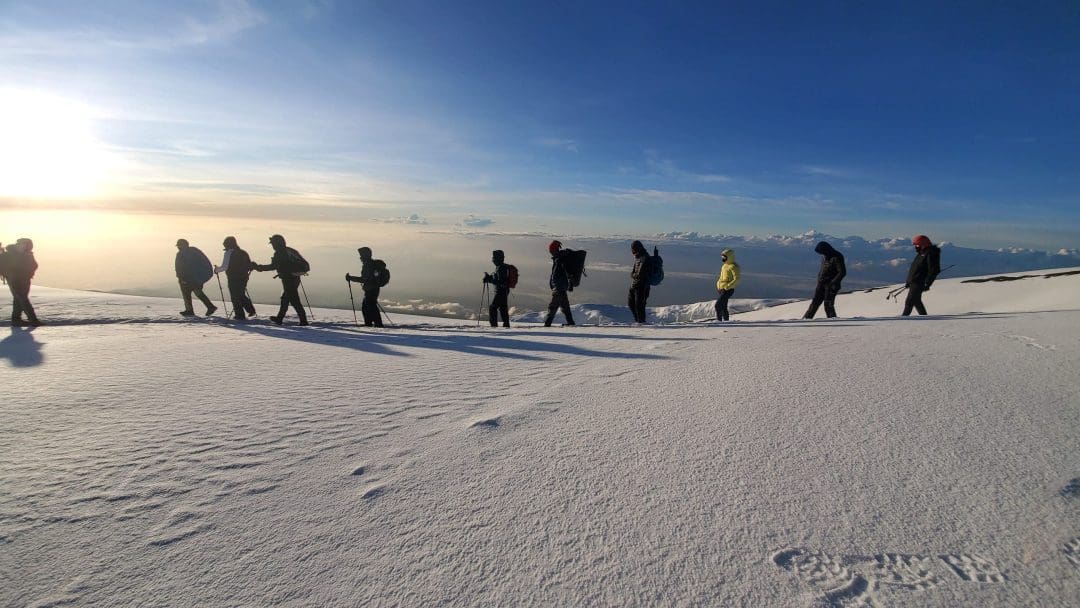
The Arctic Zone is the highest of the five ecological zones on Kilimanjaro, extending from approximately 5,000 meters to the summit at Uhuru Peak (5,895 meters).
There are no animals or vegetation in the area, except for tough lichens that are slowly declining in abundance. The weather conditions include intense sunlight, strong winds, and extreme cold, particularly at night.
Depending on the route you choose, such as Lemosho, Marangu, Machame, or Rongai, the climb typically takes six to eight days.
Because of declining oxygen levels, climbers risk developing acute altitude sickness.
Most people begin their final push at midnight, moving slowly through the cold, thin air; after reaching the top, they stop to watch the sunrise before heading back to base camp.
Climbing Kilimanjaro is a trek through five different climate zones, each with its own unique challenges and unforgettable experiences. Understanding these zones helps you prepare more effectively and know what to expect at every stage of the process.
If you’re thinking about taking the next step, explore our Mount Kilimanjaro trekking packages to find a route and experience that match your goals.
Kilimanjaro’s climate zones range from cold at the summit to tropical warmth at the base. Each climatic zone has distinct weather patterns: the Arctic tundra is dry and icy, whereas rainforests receive the most precipitation.
Climbers need specialised equipment and strategies to traverse these vegetation zones. Amid fluctuating weather conditions, they also face mental and physical challenges related to altitude acclimation and unexpected terrain.
The dry months (January-March, June-October) are ideal for summiting Kilimanjaro due to consistent weather, low rainfall, and safer hiking conditions. Rainy seasons make pathways slick and challenging to navigate.
There are five climate zones in Mount Kilimanjaro. Starting with the Cultivation Zone, Rainforest Zone, Heath and Moorland Zone, Alpine Desert Zone and Arctic Zone.





















TripAdvisor Award


WhatsApp us